Home Blog Page 119

What Is Skin Gloss And How To Measure It?

Skin specular gloss (or simply gloss) is an important indicator in the dermatology and cosmetic industry, as it represents skin health and beauty. It is related to skin surface texture and refractive index and can be improved after rejuvenation treatment and the use of cosmetics.
Although there is a trend to create cosmetic products that leave the skin with a mattified appearance, there is also a search for products that improve overall facial gloss, creating an enhanced complexion appearance. These products are related to a healthier life as skin and hair are supposed to show a natural, luminous gloss without appearing oily.

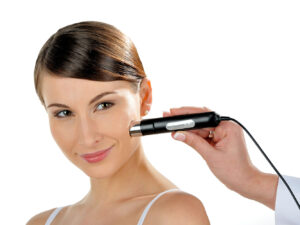
For both analyses, the use of devices to measure and characterize this parameter by the principle of reflection of polarized light from the skin surface and unpolarized light from the skin subsurface is useful.

The Skin-Gloss Meter, by the company Courage & Khazaka, has a specialized probe head that is quick and easy to use. Along with measuring gloss, it also presents values of diffuse scattered light, which is used to minimize the influence of skin’s natural color on the final result. 
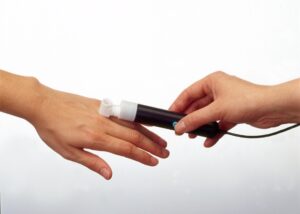
Among other devices, there is also the portable alternative by the company Delfie, the equipment called SkinGlossMeter. The instrument has a built-in red diode laser which reflects light at the same angle as it contacts the measured surface.

Along with skin hydration and oiliness, the measurement of skin gloss is also an important parameter to analyze the skin conditions and aging process to determine the actual results of any treatment.

Read also: How can I measure my skin hydration?

To know more about Skincare Devices and Beauty’s latest updates, please Like and Follow our Facebook and Instagram accounts…

Maísa Melo, MSci

About the Author: MSci Maísa Melo is a Pharmacist and a current PhD student in cosmetic technology, from São Paulo, Brazil. She has earned her master’s degree from the University of São Paulo and has been involved with the development, stability, safety and efficacy of cosmetics since 2013. She has specialized in the clinical efficacy of cosmetics by biophysical and skin imaging techniques as well as the use of alternative models to animal testing. Her research work has been published in several scientific journals and book chapters from the field.

Chin Fillers: Candidates, Results, Side Effects, and More

0

Chin fillers are injectable dermal fillers that are used to add definition and shape to the chin area and lower jawline. Dermal fillers are made from both natural and synthetic materials, and are injected into facial areas to fill in lines and smooth wrinkles.

Filler material can strengthen the lower jawline, balance the profile and augment the chin. Some fillers last longer than others. For example, synthetic fillers are proven, long-lasting treatments. Other filler materials such as hyaluronic acid (HA) fillers absorb into the body over time and must be repeated on occasion.

Best fillers for the chin area

Some of the most commonly used fillers for the chin area are HA-based gel fillers such as Juvederm Voluma and Restylane Defyne. As HA is naturally produced in the body, it has a low risk of side effects.

Juvederm results are visible immediately; with Restylane, it may take a few days to see the full results. Restylane treatments last for up to 12 months, while Juvederm can last for up to two years.

Synthetic fillers like Radiesse, made with calcium hydroxylapatite (CaHA), and Sculptra, made with poly-L-lactic acid (PLLA), are also effect in addressing the chin and lower jawline. These materials last longer than HA-based fillers; 9–15 months for Radiesse and up to two years for Sculptra.

A recent study found HA and CaHa to both be safe and effective for augmenting and defining the chin and lower jawline.

Ideal Candidates for this Treatment

People over the age of 21 who would like to better define their jawline, strengthen their chin or fill in wrinkles or lines around the chin are good candidates for for this. They should be in good overall health, have no allergies or health conditions, should not smoke and should be able to take good care of their skin post treatment.

What chin fillers can’t do

It can’t correct severely sagging skin or deep wrinkles; instead, fillers are best for mild-to-moderate concerns. If you want more dramatic or permanent corrections, a chin implant might be your best option.

Read more: Chin Fillers: Candidates, Results, Side Effects, and More

To know more about Skincare Devices and Beauty’s latest updates, please Like and Follow our Facebook and Instagram accounts…

Read also: Here’s A Complete Guide To Using A Face Mask Maker Machine

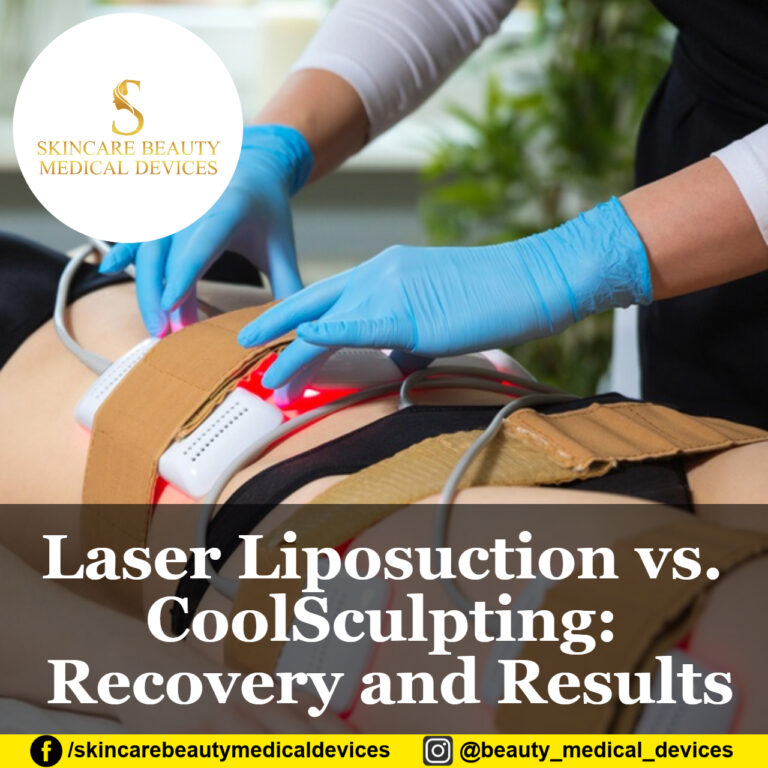
Laser Liposuction vs. CoolSculpting: Recovery and Results

0

Laser liposuction and CoolSculpting are two cosmetic procedures that can help remove fat from under the skin. Both procedures are minimally invasive.

Laser liposuction and CoolSculpting do share some similarities. For example, they are both suitable for people who are near their ideal weight.

However, the procedures do have some key differences to consider.

In this article, learn about their effectiveness, and results, as well as what to expect during the procedures.

Effectiveness

When it comes to general effectiveness, both laser liposuction and CoolSculpting can provide similar results.

The procedures may work best for people who have a moderate weight.

Both laser liposuction and CoolSculpting tend to be preferable to more invasive options. In fact, a review in the journal Aesthetic Plastic Surgery notes that laser assisted liposuction appears to produce better results and has better patient satisfaction than traditional liposuction.

However, without making healthy changes to the diet and lifestyle, the person may simply gain the weight back.

Process

Laser liposuction and CoolSculpting have different processes.

Laser liposuction

This procedure or laser lipolysis, uses a laser to remove fat from under the skin.

A doctor will perform the procedure in the office. The person will be awake during the procedure, so the doctor will apply a local anesthetic to the area where the laser will enter.

They will then make a small incision in the skin, which allows the laser to enter. The concentrated laser light will melt the fat away from under the skin.

Once this is complete, the doctor will insert a small tube into the same area to suck away the liquefied fat.

The doctor will then close and cover the incision site. The entire process takes about 1 hour per area.

CoolSculpting

CoolSculpting is a version of cryolipolysis, which is a noninvasive way to get rid of excess fat cells. There are no incisions necessary for this process.

CoolSculpting safely freezes the fat cells in the area. The body can then remove these fat cells with time.

The procedure involves placing an applicator to the treatment area, where it will freeze the fat cells beneath the skin. The body then processes these fat cells out as waste.

Each CoolSculpting session will take 30–60 minutes per area.

Read more: Laser liposuction vs. CoolSculpting: Recovery and Results

To know more about Skincare Devices and Beauty’s latest updates, please Like and Follow our Facebook and Instagram accounts…

Read also: Print Any Design Onto Your Nails Using Digital Mobile Nail Art Printer


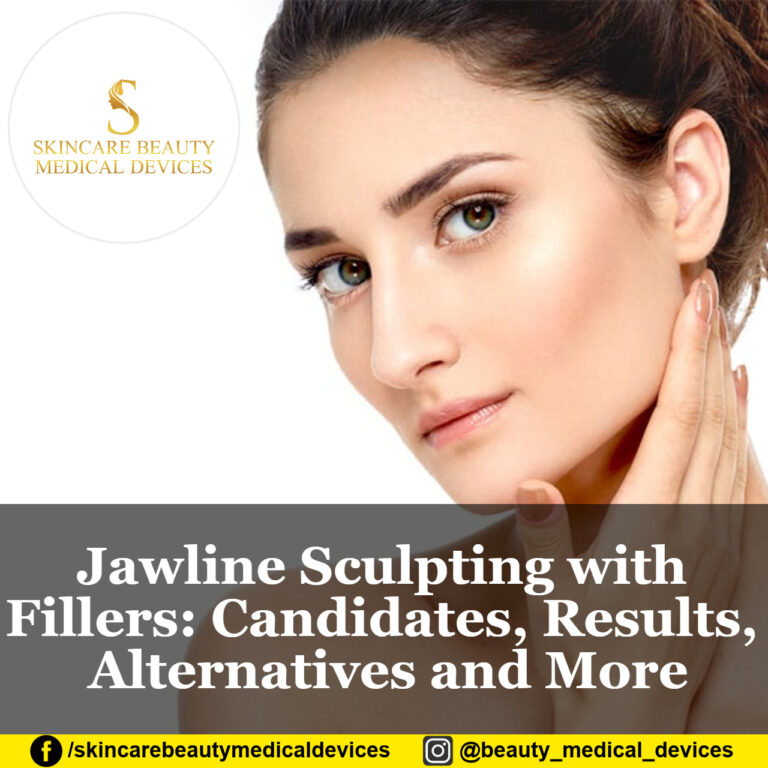
Jawline Sculpting with Fillers: Candidates, Results, Alternatives and More

0

Jawline sculpting can strengthen and define a weak jawline or soften a jawline to ultimately enhance facial features. For adults who have lost volume due to age, fillers can effectively plump the lower face to restore a more youthful appearance.

As people age, it is common to lose bone density in the jaw. This affects both sexes, but is more common among women due to hormonal changes that occur with menopause. For some, fat can accumulate in the chin area, resulting in a loss of definition; others may not have had a strong jawline structure to begin with.

A number of options to sculpt and define the jawline are available, ranging from nonsurgical options such as fillers or botulinum toxin injections to surgical procedures such as neck liposuction or neck lifts.

Fillers are a practical and effective choice to address your issues, and several types are available to suit your individual needs. They are noninvasive, effective and long lasting.

When injected along the mandible (lower jawbone), dermal fillers can define and improve the look of the jawline. In addition to making the facial structure appear stronger, this also results in the neck appearing slimmer.

Best fillers for jawline sculpting

Clinical experience with various filler materials has demonstrated that hyaluronic acid (HA), poly-L-lactic acid and calcium hydroxylapatite are all appropriate and effective options for jawline contouring.

HA is a natural material that has many applications as a dermal filler – with Juvederm and Restylane taking the lead as popular brands in this category. Its safety and efficacy make it a popular option for adding definition to the jawline.

Poly-L-lactic acid (Sculptra) is a biocompatible compound that has the ability to stimulate natural collagen production in the body. It can provide long-lasting jawline recontouring.

Calcium hydroxylapatite (Radiesse) is another dermal filler shown to stimulate the production of the body’s natural collagen. In clinical trials, calcium hydroxyapatite produced significant jawline contouring results.

To know more about Skincare Devices and Beauty’s latest updates, please Like and Follow our Facebook and Instagram accounts…

Read also: High Frequency Therapy for Hair Loss

15 Best Hair-Dryer Brushes and How to Use Them

What are hair-dryer brushes?

A hair-dryer brush is a corded round brush that blows heat from the inside out to dry your hair as you brush, twirl, and style it. Basically, it combines your blow dryer with your round brush, so you legit only need one tool to blow out your hair (plus, obviously, a very good heat protectant spray). The result? Straight, yet bouncy hair. And don’t be confused by the jargon: hair-dryer brush, hot-air brush, blow-dryer brush—they’re all the same thing.

Are hair-dryer brushes good?

It depends on your hair type and skill level. If you’re someone who absolutely cannot give yourself a professional-looking blowout at home—especially if you have wavy/curly or thick hair—then yes, a hot-hair brush is definitely a good tool to try. But if you’re someone who is pretty skilled with a round brush and a blow dryer already, you might not find that it leaves your hair as smooth and sleek as your usual combo.

K, now onto what you came here for: The 15 best hair-dryer brushes for every hair type, preference, and budget.

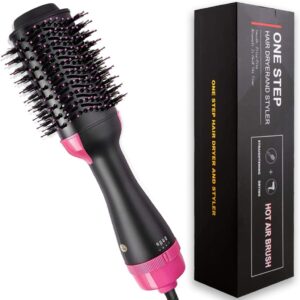
One-Step Hair Dryer and Volumizer

Not only has the Cosmo staff personally reviewed the Revlon One-Step on curly, wavy, and straight hair (and, ahem, genuinely loved it), but this cult-favorite hair-dryer brush also has more than 318,000 (!) positive reviews on Amazon, so you know it’s good. With three heat and speed settings, and a mix of nylon and tufted bristles, this blow-dry brush will leave your hair with maximum volume and shine.

InfinitiPro The Knot Dr. All-in-One Dryer Brush


One-Step Hair Dryer & Styler

Ah, Revlon—so nice, it gets listed twice (hi, I’m free for all your tag lines, thanks). The one complaint I’ve heard during blow-dry-brush reviews? The round brush is kinda hard to maneuver for total hair newbs. If that sounds like you, try this flat brush, which blow-dries your hair as you brush it. Just note that it’s best for hair that’s already straight (think: straight hair with some bumps and waves).

Read more…

To know more about Skincare Devices and Beauty’s latest updates, please Like and Follow our Facebook and Instagram accounts…

Also read: Enhance the beauty of Curly hair with Pro Diffon Ceramic Hot Air Diffuser

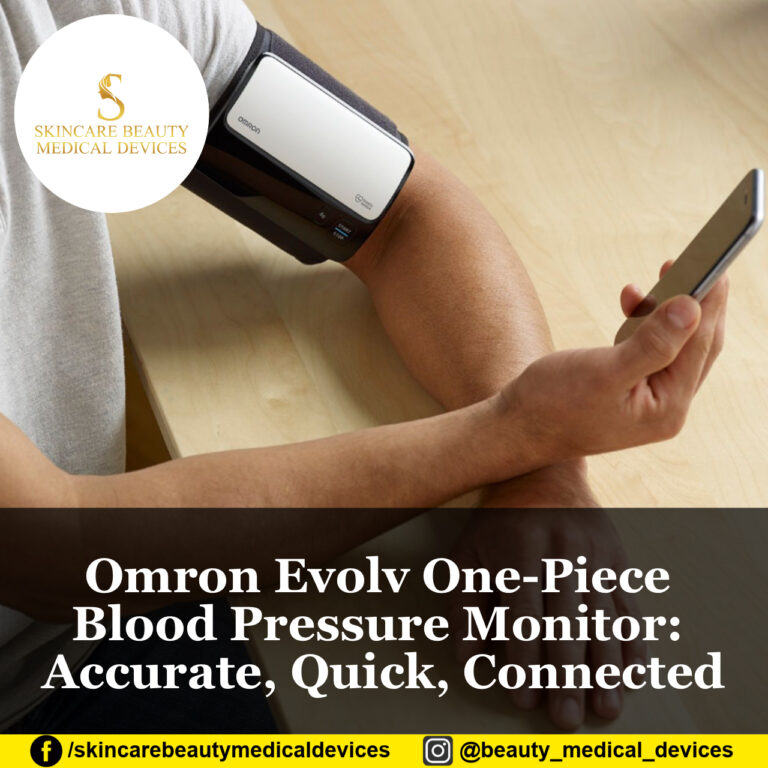
Omron Evolv One-Piece Blood Pressure Monitor: Accurate, Quick, Connected

When it comes to self-monitoring of blood pressure, the best device (assuming equivalent accuracy) is the one that patients are most likely to use.

The Omron Evolv has become that device for the Skeptical Cardiologist, as it combines a unique one-piece design with built-in readout with a quicker, more comfortable yet highly accurate BP measurement technique.

Form and Function

The Evolv is sleek and stylish in appearance and has no external tubes, wires, or connectors. It runs on four AAA batteries.

The cuff is pre-formed and is incredibly easy to self-administer to the upper arm. Measurement is simple. Press the start button and it immediately starts inflating the cuff.

The results are displayed on an LCD screen on the cuff.

The Omron uses an oscillometric technique to measure the blood pressure as it is inflating. This “inflationary” technique has been shown to be as accurate as measuring during deflation but is much quicker. A study using the recently developed “Universal Standard Protocol” for evaluating the accuracy of BP devices showed that the Omron Evolv was highly accurate compared to gold standard sphygmomanometry.

Omron has come up with some slick marketing terms for the inflationary and pre-formed wrap aspects:

  • Intellisense Technology – Inflates the cuff to the ideal level for each use.
  • Intelli Wrap Cuff – For an easy and accurate reading

With the inflationary technique, the cuff knows when to stop inflating; therefore, there is less tendency to go to higher pressures compared to the deflationary technique and less potential for discomfort from those higher pressures.

Sharing Results

The Evolv communicates via Bluetooth with the Omron Wellness (or Connect) smartphone app. Your BP and heart rate measurements are easily transferred to this app and can be viewed over time.

Here are my blood pressure and heart rate measurements over the last week:

If you click on the little “export” icon at the upper right had corner of this summary screen, you can “export CSV,” which creates a file of BP measurements over a defined period that can then be emailed to yourself, your curious friends, or your doctor.

Another option is to export the summary report, but this is a premium feature and requires payment.

Read more: Omron Evolv One-Piece BP Monitor

To know more about Skincare Devices and Beauty’s latest updates, please Like and Follow our Facebook and Instagram accounts…

Read also: Vitamin C Baths – Why You Do Not Have To Worry About the Chlorine In Your Showers

What You Should Know About Chemical Peel Treatment

0

Chemical peel treatment is applied to the face, hands, and neck. They’re used to improve the appearance of the skin. During this procedure, chemical solutions will be applied to the area being treated, which causes the skin to exfoliate and eventually peel off. Once this happens, the new skin underneath is often smoother, appears less wrinkled, and may have less damage.

There are a number of reasons people may get chemical peels. They may be trying to treat a variety of things, including:

  • wrinkles and fine lines
  • sun damage
  • acne scars
  • hyperpigmentation
  • scars
  • melasma
  • uneven skin tone or redness

What type of chemical peels can I get?

There are three different types of chemical peels that you can get. These include:

  • Superficial peels, which use mild acids like alpha-hydroxy acid to gently exfoliate. It only penetrates the outermost layer of skin.
  • Medium peels, which use trichloroacetic or glycolic acid to reach the middle and outer layer of skills. This makes it more effective for removing damaged skin cells.
  • Deep peels, which fully penetrate the middle layer of the skin to remove damaged skin cells; these peels often use phenol or tricholoracetic acid.

How is a chemical peel done?

Chemical peels are typically done in-office; deep peels may be done in an outpatient surgical facility. Before the procedure, they will likely have you tie back your hair. Your face will be cleaned, and eye protection like goggles or gauze may be applied.

Your doctor may numb the area with a topical anesthetic, especially if you’re receiving a deep peel. For deep peels, your doctor may also use a regional anesthetic, which will numb large areas. They are particularly likely to do this if you’re having your face and neck treated. For deep peels, you’ll also be given an IV, and your heart rate will be closely monitored.

Read more: What You Should Know About Chemical Peel Treatment

To know more about Skincare Devices and Beauty’s latest updates, please Like and Follow our Facebook and Instagram accounts…

Read also: Olay Skin Advisor App : Your personal guide to customized skincare routine

Vitamin C Baths – Why You Do Not Have To Worry About the Chlorine In Your Showers

A new trend on the skin care market is shots of vitamin C on shower heads to neutralize the chlorine in the shower water which leads to many improvements in the hair and skin health.

Although there are some differences in showering in hard and soft water, the addition of Vitamin C is polemic as there is no scientific evidence that chlorine in bath water damages the skin in any way and that the addition of the substance in the shower head will create the right conditions for the chemical conversion. 

Even if the conversion happens, it is not clear if there is any health benefit. Some brands offer the scented filters with Vitamin C, which may have a different effect as it might work as aromatherapy, which is known to have effects on the skin, depending on the utilized substance. 

After a few Vitamin C infused showers, there might be some improvements in the hair and skin appearance but there is no evidence that it will work in the body as a whole. Your daily dose of Vitamin C should be consumed through the food (especially fruits) and if too much is ingested, the body will not receive all of it and ends up being “thrown away”. This way, new devices to increase the quantity of Vitamin C might not be effective. 

As a product to promote relaxation and a new experience during shower, the vitamin infused filter might be an interesting choice, but it is important to remember that the benefits are not proven in the scientific literature. Moreover, consuming foods with the right amount of vitamins is the best way to reach the adequate levels for your body. 

Read also: Ionic Shower Filter: Does it make any difference in my beauty routine?

To know more about Skincare Devices and Beauty’s latest updates, please Like and Follow our Facebook and Instagram accounts…

Maísa Melo, MSci

About the Author: MSci Maísa Melo is a Pharmacist and a current PhD student in cosmetic technology, from São Paulo, Brazil. She has earned her master’s degree from the University of São Paulo and has been involved with the development, stability, safety and efficacy of cosmetics since 2013. She has specialized in the clinical efficacy of cosmetics by biophysical and skin imaging techniques as well as the use of alternative models to animal testing. Her research work has been published in several scientific journals and book chapters from the field.
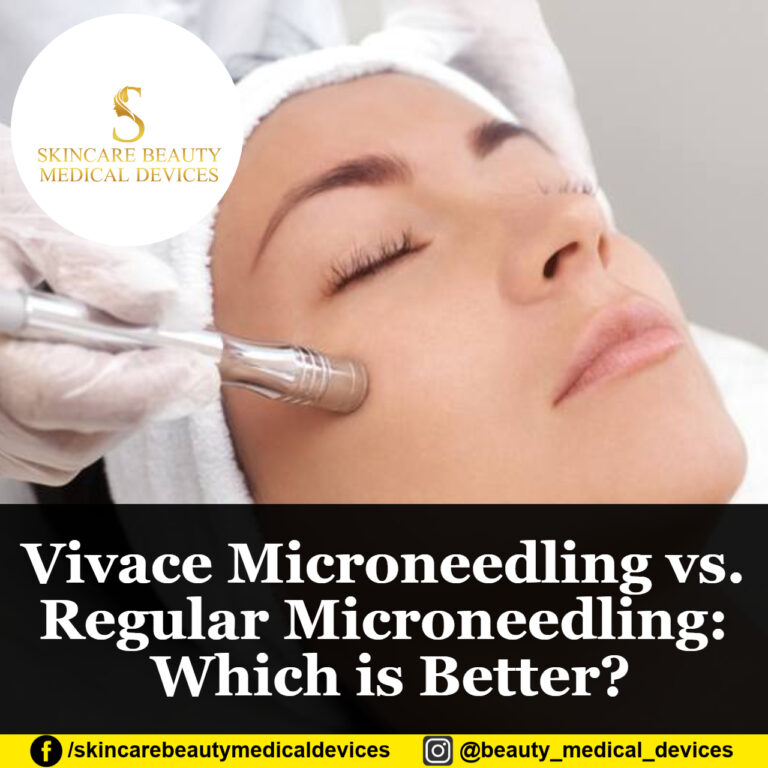
Vivace Microneedling vs. Regular Microneedling: Which is Better?

0

Vivace is the best-in-class, FDA-cleared micro-needling device with radiofrequency. It provides patients with an incomparable experience. The procedure is non-invasive and virtually pain-free with minimal to no downtime.

Vivace Experience takes normal micro-needling to the next level by combining radiofrequency, LED light, and insulated gold-tipped needles. The combination of micro-needling and radiofrequency allows you to experience both epidermal resurfacing and deeper dermal remodeling.

This revolutionary treatment will rejuvenate the skin and addresses signs of aging such as facial wrinkles and fine lines, acne scars, large pores and uneven skin tone and texture.

What Makes Vivace Superior to the Regular Microneedling?

1. Virtually Pain-free

The Vivace Experience creates the most comfortable patient experience. Before the treatment, personalized compounded numbing cream, the best numbing cream available, will be applied for 30 to 45 minutes. Vivace microneedling creates microscopic injuries in the skin to stimulate collagen with super-fine, insulated, gold-tipped needles that enter the skin smoothly and evenly. The 36 insulated, gold-tipped needles have a small diameter that makes the treatment more comfortable for patients. Vivace Device’s unique robotic motor is so precise that the discomfort level is almost zero. Comparatively, dermal rollers and pens can cause unnecessary pain, discomfort, tearing and bleeding.

After the treatment, our aesthetician will put on specially formulated serums and soothing masks to enhance the results and relieve the redness.

2. Zero Downtime

Vivace Microneeding produces comparable results to laser treatments with much less downtime. You can go out, do your groceries or come back to work right away. Any redness or pinpoint bleeding resolves quickly within 1-2 hours.

In comparison, the regular micro-needling devices glide across your skin and can damage or scratch the surface of your skin.

3. Significant, Noticeable Results

What differentiates the Vivace RF most from the regular micro-needling is the incorporation of Red and Blue Light Therapy. Red Light is an anti-aging therapy that can improve skin tones, textures, and acne scarring. Blue Light is an anti-bacterial therapy that can kill off bacteria and target active acne.

The combination of LED Light Therapy with micro-needling and radiofrequency makes Vivace an ultimate 3-in-1 treatment.

Read more: Vivace Microneedling vs. Regular Microneedling: Which is Better?

To know more about Skincare Devices and Beauty’s latest updates, please Like and Follow our Facebook and Instagram accounts…

Read also: Are You Aware About The Incredible Benefits Of Thai Massage Therapy

Diagnosing Your Skin: How and Why It Is Important To Know If You Have Oily Skin

Oily skin is a condition of great importance in dermatology and one of the main concern shown by patients. It leaves the skin with an unpleasant sensation and can be associated with blackheads and acne

It is not healthy to completely remove the skin sebum, as it is an important part of the balance that guarantees the correct operation of its functions but when in excess, some treatments can be applied to control this characteristic.

But sometimes we believe that the skin is oily or dry when it’s no. This way, some specialized devices to measure the oiliness in real time are interesting tools to start the right treatment.

One of the most popular equipment for this objective is the Sebumeter®, by the German company Courage & Khazaka. It is widely used for both cosmetic and medical evaluations, as it can prove if a product is changing the skin overtime or to evaluate the patient and determine what type of skin is present. It is a photometric technique, where a polymeric film has contact with the skin surface, making it go from opaque to transparent. The oiliness is determined by how much transparent area is present on the tape.

A portable option is the SebumScale, by the company Delfin. It measures the amount of sebum accurately in micrograms per 1 cm2 as there is a built-in microbalance. Based on quartz crystal microbalance technology, the sensor is placed briefly on the skin to absorb the sebum and only takes a few seconds to present the result.

There are many more options of similar devices and they can be used in different regions of the body too. Understanding the needs of our skin will make it possible to focus the treatment on products that will fill the gap and make the skin better and healthier. 

Read also: Devices to Measure Skin Elasticity – What Are They and How They Work

To know more about Skincare Devices and Beauty’s latest updates, please Like and Follow our Facebook and Instagram accounts…

Maísa Melo, MSci

About the Author: MSci Maísa Melo is a Pharmacist and a current PhD student in cosmetic technology, from São Paulo, Brazil. She has earned her master’s degree from the University of São Paulo and has been involved with the development, stability, safety and efficacy of cosmetics since 2013. She has specialized in the clinical efficacy of cosmetics by biophysical and skin imaging techniques as well as the use of alternative models to animal testing. Her research work has been published in several scientific journals and book chapters from the field.