


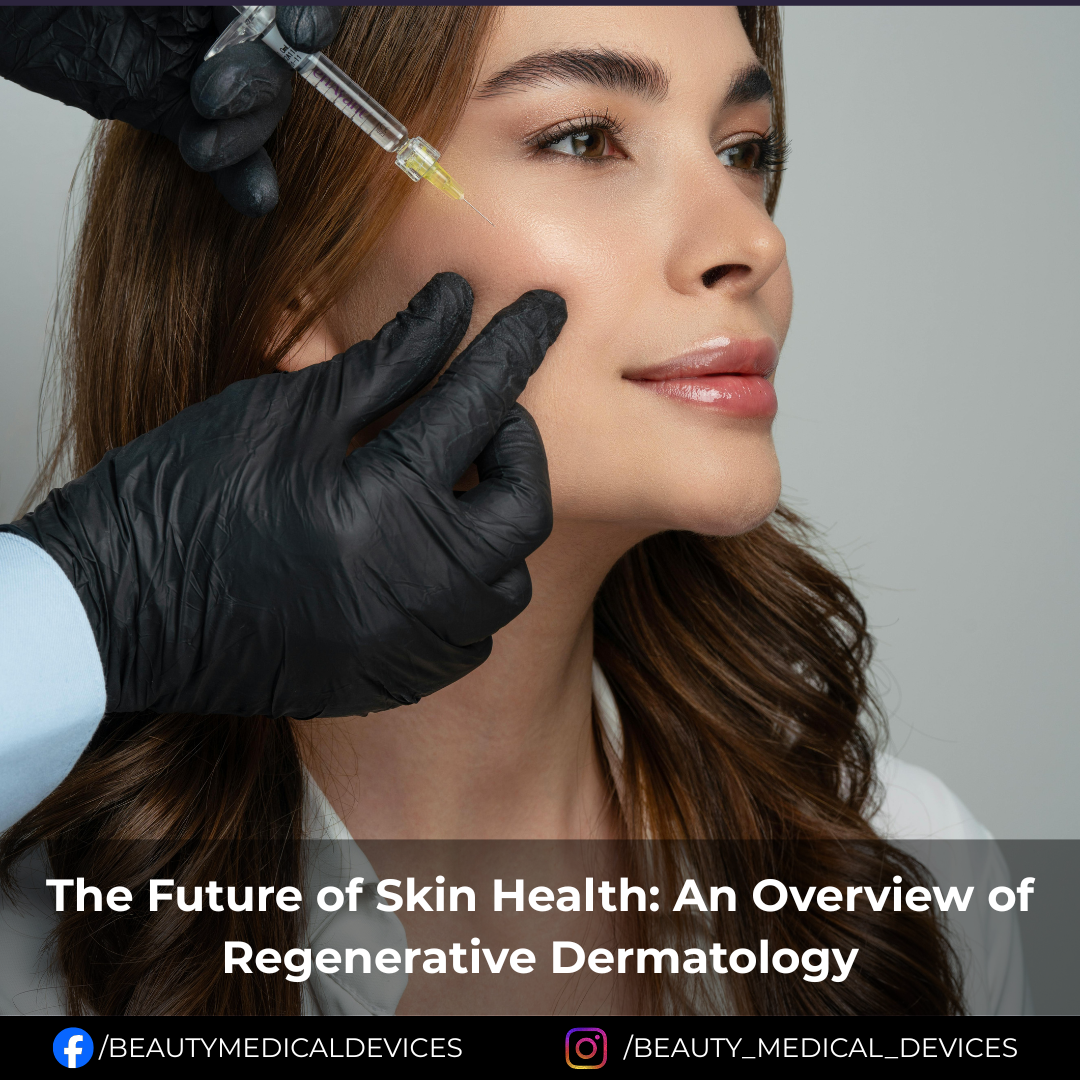
Regenerative dermatology is at the forefront of medical and aesthetic advancements, moving beyond temporary fixes to fundamentally restore the function and structure of the skin.2 It utilizes principles from regenerative medicine—such as tissue engineering, cell-based treatments, and growth factor therapies—to address a variety of long-standing diseases, scars, and signs of aging.3
What is Regenerative Dermatology?
Unlike traditional dermatology, which often manages symptoms, regenerative dermatology seeks to activate the body’s own repair processes at the cellular level.4 The goal is to replace impaired tissue with new, healthy tissue, leading to more natural, sustained, and long-lasting results.5
Key Techniques and Therapies
The field is built upon several innovative, often minimally invasive, approaches:6
1. Platelet-Rich Plasma (PRP) Therapy:
Mechanism: PRP involves drawing a small sample of the patient’s blood, concentrating the platelets via centrifugation, and injecting the resulting plasma back into the skin or scalp.7
Benefit: The concentrated platelets release a high volume of growth factors (like PDGF, TGF-β, and VEGF) that stimulate cell proliferation, collagen and elastin production, and new blood vessel formation (angiogenesis).8
Applications: Widely used for hair restoration (alopecia), facial rejuvenation, improving skin texture, and accelerating wound healing/scar reduction.9
2. Stem Cell-Based Therapies:
Mechanism: Stem cells, particularly Mesenchymal Stem Cells (MSCs) often derived from adipose (fat) tissue, possess the ability to differentiate into various cell types (like fibroblasts) and secrete pro-regenerative cytokines and growth factors.10
Benefit: These therapies promote tissue repair, reduce inflammation, and enhance the skin’s natural regeneration cycle.11
Applications: Promising for chronic wounds, burns, and advanced anti-aging procedures.
3. Exosome Therapy:
Mechanism: Exosomes are tiny, cell-secreted vesicles that act as crucial messengers, transferring proteins, lipids, and genetic material between cells.12 They are often derived from stem cells.
Benefit: They signal surrounding cells to engage in repair and regeneration, offering potent anti-inflammatory and wound-healing properties without introducing whole cells.
Applications: A cutting-edge treatment for skin rejuvenation and enhancing the healing process.13
4. Bio-Stimulatory Agents (e.g., PLLA, CaHA):14
Mechanism: Injectable fillers made from materials like Poly-L-lactic Acid (PLLA) or Calcium Hydroxylapatite (CaHA) work by creating a scaffold that gradually stimulates the body to produce its own new collagen over time.
Benefit: They restore lost volume and improve skin density and laxity through natural collagen production.15
Applications Across Dermatology
Regenerative therapies are revolutionizing the treatment of both medical and aesthetic conditions:16
| Application Area | Conditions Targeted |
| Aesthetic Medicine | Photoaging, fine lines, wrinkles, skin laxity, volume loss, texture improvement. |
| Scarring | Acne scars, surgical scars, stretch marks. |
| Hair Restoration | Androgenetic alopecia (male/female pattern baldness). |
| Wound Management | Chronic non-healing wounds, burns, diabetic ulcers. |
| Chronic Skin Conditions | Exploring potential for conditions like psoriasis and vitiligo by modulating the immune response. |
The Road Ahead
Regenerative dermatology is a highly active area of research.17 While established treatments like PRP are widely used, newer approaches like exosomes and personalized 3D bioprinting of skin constructs are under active development.18
The field is continuously striving for standardization of protocols (especially for PRP and stem cell products) to ensure consistent, predictable results and widespread patient benefit.
Read also:Adaptogens: Nature’s Stress Managers