Home Blog Page 367

Chamomile Geranium Spray for Face and Body

When the winter frost has you cooped up indoors, it is calming to cozy up with a hot mug of chamomile tea to relax and melt away those wintry blues. And what is good for the body internally, is often good for the body externally as well. For a dose of relaxation, try this chamomile geranium spray for face and body – it’ll do you and your skin a world of good!

Next time you are boiling water for chamomile sipping purposes, consider steeping an extra mug of tea to use as a face and body mist. Chamomile can help hydrate, calm irritated or inflamed skin, balance oils, and provide the skin with a healthy glow. Geranium oil is equally beneficial in that it can reduce wrinkles, has antibacterial properties to fight off infection, and because it is a circulatory oil (meaning it exits the body via perspiration) it can actually combat body odor and work as a natural deodorant as well!

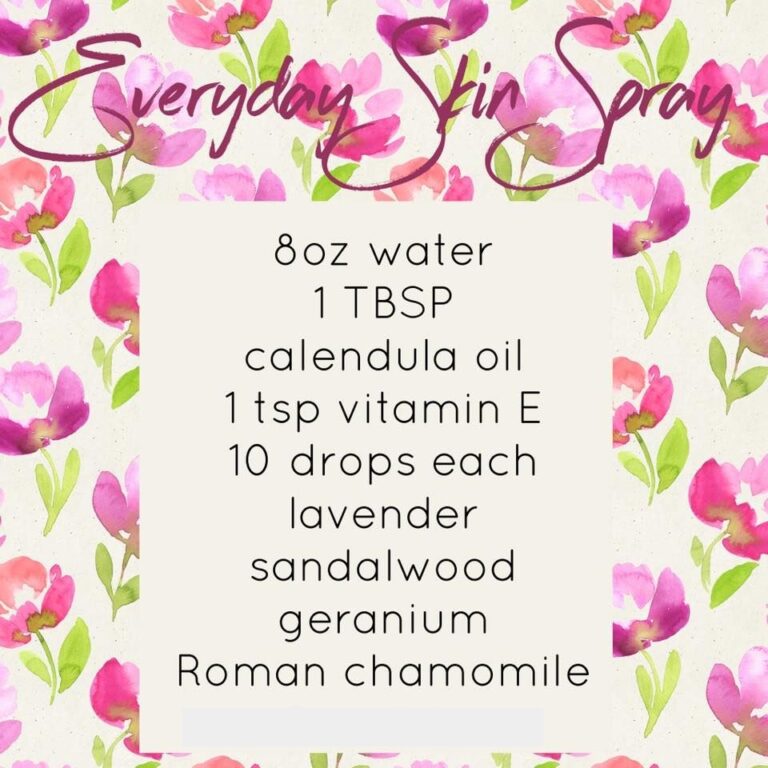
Chamomile Geranium Spray Recipe:

What You’ll Need:

  • 1 cup of distilled or filtered water
  • 1 chamomile tea bag
  • 2 tsp witch hazel
  • 10-15 drops of geranium oil
  • Funnel (for easy pour and less mess)
  • 8-ounce spray bottle

How to Make:

  1. Bring 1 cup of water to a boil and let the chamomile tea bag steep for 20 minutes.
  2. After steeping, remove the teabag and set the tea aside to cool. Once cooled, use the funnel to pour the tea into an 8-ounce spray bottle.
  3. Add 2 tsp of witch hazel (as a holder for the geranium oil) and 10-15 drops of geranium oil. Give the bottle a good shake to ensure all ingredients are mixed.
  4. Spray on face and body for hydration, odor elimination, or for a quick pick-me-up!
  5. Also works really well as a room or pillow spray! Read more

Also read: Hair Masks for Dandruff

10 Natural and Cheap Ways to Remove Acne Scars

Acne scars are not only unsightly, but they can be a nightmare to get rid of. I know this personally, because after years of suffering from acne, I was left with a scar-covered complexion that was beyond embarrassing. I tried different creams and lotions, spent hundreds of dollars, but to no avail. Some scars seemed to fade, but the majority remained.

#1. Coconut Oil

coconut oil for Acne Scars

Coconut oil has so many uses, it’s no wonder its called the miracle cream. To use it on your acne scars, simply apply a small amount of your scars. No need to wash off, as coconut oil will simply absorb into your skin and you’ll reap all of its amazing benefits. Apply it at night before bed and repeat for a few weeks.

#2. Aloe Vera Gel

Aloe-Vera-Oil-Extract for Acne Scars

Try your absolute hardest to get your hands on an actual aloe plant. They’re cheap to buy and super easy to maintain – plus they’re good for the air in your home, not to mention so many other things! Simply break off a small piece of the plant, cut lengthwise and scoop out the gelatinous pulp. Apply it to your scars and leave on for at least 20-30 minutes. Rinse off with warm water. You can do this once or twice a day. Repeat for a few weeks.

#3. Cucumber

cucumbers for Acne Scars

Just like you’re applying cucumber to your eyes, you’ll do the same to your scars. Simply cut up thin slices of the stuff and apply directly to your skin. Leave on for 20-30 minutes. You can also do this procedure once or twice a day and repeat for a few weeks for optimal effects.

#4. Honey

honey comb for Acne Scars

Honey is one of the best things you can use for scarring as long as its raw and organic. Don’t go into Walmart or your big-chain grocery store for this stuff. Go to a local farmers market where you KNOW the honey is raw and organic. You’ll want to just apply a small amount to your scars and let that sit there for about 20 minutes. For an added cleansing agent, you can also mix in a little bit of cinnamon. Rinse off and repeat as desired.

#5. Lemon

lemon for Acne Scars

Lemon juice is a natural alpha-hydroxy acid (AHA) that can be used to fade scars, promote healing, and revitalize skin. Squeeze the juice of an organic lemon into a bowl and using a cotton ball, apply directly to your scars. You can also dilute it with a little bit of water if you have sensitive skin. Once the lemon has dried onto your skin, rinse with cold water. Only use this treatment once every two or three days.

#6. Potato

potatoes for Acne Scars

The juice of a potato is very beneficial to your skin, especially for acne and scarring. Just like cucumbers, apply thin layers of potato directly onto your scars. Leave on for 15-20 minutes and rinse off with cold water. You can do this once a day. Repeat for a few weeks. Read More……………

Also Read: Best Anti-Aging Skin Care Ingredients

Hair Masks for Dandruff

We all love to rock our amazing hair but sometimes tiny skin flakes can stop us from doing so. Today we will look into some hair masks for dandruff and help fight this annoying condition.

Dandruff is a condition of the scalp considered to be a mild form of seborrhoeic dermatitis. Dandruff causes itchiness and flakes of skin on the scalp.

Dandruff Causes

There is not an exact cause of why dandruff appears, but there are some factors that can be considered as a possible cause.

  • Dry Hair: when people have dry hair, it can sometimes cause dandruff, specifically now in the winter when cold air can cause dryness.
  • Oily scalp: having an oily scalp is another cause.
  • Hair products: some shampoos and skincare products can be a cause of dandruff. Also not shampooing enough may cause oil build-up, dead skin cells, and therefore encouraged dandruff.
  • Your Diet: The lack of vitamins, some fats and zinc, may increase the risk of getting dandruff. Try to consume foods that are rich in these supplements.
  • Skin conditions: some skin conditions like eczema and psoriasis can also be a cause.
  • Stress: Stress can also trigger dandruff.

3 Hair Masks for Dandruff

Fortunately, there is always something natural you can rely on, and dandruff remedies are no exception. Let’s talk about some amazing hair masks for dandruff and stop this annoying condition.

#1. Aspirin Honey Hair Mask

Ingredients:

Directions:

  1. In a small bowl, mash the aspirins until there is only powder left.
  2. To that bowl, add the rest of the ingredients and mix to make a paste.
  3. Slowly start applying to your scalp and part your hair to simplify the process.
  4. After covering your whole scalp, gently massage around.
  5. Leave on for 20-30 minutes.
  6. Wash of the mask and shampoo as normal.
  7. Use 1-2 times a week for best results.

Why this Works:

Aspirin works as an exfoliator, removing dead skin cells to improve the adoption of nutrients into the scalp. It cleans deeply removing fungi that can cause dryness and dandruff. Aspirin also Increase the circulation in the scalp and strengthen the follicles. Adding aspirin to your shampoo is another way of fighting dandruff.

Honey has anti-inflammatory, antiviral and antifungal properties making it the perfect ingredient to fight dandruff. Honey is also healing and pH balancing which can heal this condition.

Apple cider Vinegar controls oil production while strengthening hair follicles. ACV balances the scalp pH level making it one of the best ingredients to unclog your follicles.

#2. Yogurt Hair Mask For Dandruff

Ingredients:

  • 1-2 tbsp of yogurt
  • 2 tbsp aloe vera
  • 2 tbsp mayonnaise

Directions:

  1. Mix all the ingredients in a bowl.
  2. Apply the hair mask starting from your scalp all the way to the ends.
  3. After applying the mask in your entire scalp and hair, cover your hair with a shower cap.
  4. Leave on for 1 hour.
  5. Wash your hair as normal.

Why this Works:

Yogurt has a bacteria called Lactobacillus acidophilus bacteria (probiotics) that can eliminate the yeast that feeds on sebum oil and causes dandruff. It also moisturizes the scalp.

Aloe vera soothes and moisturizes clogged/dry scalp fighting itchy scalp and dandruff. Aloe vera contains antibacterial, anti-inflammatory, and antiseptic properties which protects the scalp

Mayonnaise soothes the scalp while tightening and unclogging the follicles. It contains vinegar making it a super effective ingredient for balancing oil production and the scalp pH level.

#3. Honey & Avocado Mask for Dandruff

Ingredients:

  • Half a ripe avocado
  • 2 tbsp olive oil
  • 2 tbsp honey

Directions:

  1. Mash half an avocado until it forms a smooth paste.
  2. Add the rest of the ingredients and stir well.
  3. If possible, try using organic, raw honey.
  4. Apply to damp hair and spread evenly throughout hair making sure to saturate ends.
  5. Leave on for 30-45 minutes and rinse out.

Why This Works:

Rich in amino acids, avocado helps to heal and soothe a dry, itchy scalp. It also promotes healthy growth and strengthens hair. Avocado deeply hydrates, moisturizes, and prevents dryness which can cause dandruff.

Honey is a natural emollient which means it will help to seal in moisture. It’s also a natural antioxidant that will help to keep the hair healthy, strengthen hair follicles, and prevent hair loss. Read more

Also read: Best Anti-Aging Skin Care Ingredients

 

Best Anti-Aging Skin Care Ingredients

There’s No Magic Wand, But …

A number of ingredients in over-the-counter treatments may help your skin appear more youthful, but it’ll take time. You may see improvement within a few months. But you shouldn’t expect to look like you’ve stepped out of a time machine.

What will work best for you will depend on your skin, and the results you’re trying to get.

For Wrinkles: Retinol, Vitamin C

If you have fine lines, retinoids (which come from vitamin A) like retinol may make your skin smoother because they help your skin make more collagen. It’s easier on your skin than the prescription-strength version, tretinoin (Retin-A), which can dry your skin. Products with vitamin C may help take away fine lines, as well as help lessen the damage the sun does to your skin. That could help keep wrinkles away.

For Sagging Skin: Peptides, Ceramides

Treatments with topical growth factors or peptides could help firm sagging skin. Peptides are groups of amino acids that help make proteins, including collagen. That’s the main protein found in your skin.

Daily moisturizer with ceramides — fats found in the layers of your skin that you lose as you age — are an option, too — and they’re usually cheaper..

For Age Spots: Hydroquinone, Retinoids, Vitamin C, Kojic Acid

Hydroquinone, an over-the-counter drug that can bleach your skin, may fade dark spots. Retinoids may make your skin tone more even. One study says vitamin C helps  fade age spots when you use it for 12 weeks. Kojic acid — a chemical that’s often used as an skin-whitening ingredient in products — can do it, too.

When you use any of these, make sure to wear sunscreen. Your dark spots may come back if your skin gets too much sunlight.

For Uneven Skin Tone: AHAs, Retinoids

Alpha hydroxy acids (AHAs) remove dead skin cells. This could help to reveal new ones with a more even tone. Retinoids can do the same thing. Both can irritate your skin, so use them with caution if yours is dry or sensitive.  Read more

Read also:Tips to Reduce Stress and Sleep Better


Tips to Reduce Stress and Sleep Better

Stress is a response to adverse and challenging circumstances and also a response to daily life. It affects us emotionally, physically, and behaviorally. The right amount of stress can be a positive force that helps us to do our best and to keep alert and energetic. Too much stress, however, can make us tense and anxious and can cause sleep problems.

What Are the Signs of Stress?

Common signs of stress include depression, sleep problems, tension, anxiety, work mistakes, poor concentration, and apathy, among many others. If high levels of unwanted stress are not properly managed, your health and sense of well-being can suffer. Therefore, it is important to learn how to manage stress.

Tips for Managing Stress for Better Sleep

These tips can help you ease stress and hopefully get a better night’s sleep:

Assess what is stressful: The first step in getting a handle on stress is to figure out what is causing it. Take a good look at your physical condition and your daily activities. Do you suffer from pain? Are you overloaded at work? Once you identify your stressors, you can take steps to reduce them.

Seek social support: Spending time with family and friends is an important buffer against stress. It can be helpful to share your problems with people who care for you.

Practice thought management: What we think, how we think, what we expect, and what we tell ourselves often determine how we feel and how well we manage rising stress levels. You can learn to change thought patterns that produce stress. Thoughts to watch out for include those concerning how things should be and those that overgeneralize sets of circumstances (for example, “I’m a failure at my whole job because I missed one deadline.”) Many commercial audiotapes and books can help you learn thought management exercises. Read more

Read also:Looking Good When You’re Feeling Bad


Looking Good When You’re Feeling Bad

Bright, Pretty Eyes

All it takes is a little extra makeup to hide the signs of a bad cold. Brighten the inner corners of red eyes with a soft peach or champagne eye shadow. Use a pencil liner that matches your skin tone on the rim of your lower eyelid to hide redness and make your eyes look bigger.

Waterproof and Pretty

Make your eyes look wide awake — even when they’re puffy, watery, and red — with a coat or two of waterproof mascara.

Get the Red Out

Are you glowing like Rudolph? A mint green color corrector will balance redness around your stuffy nose. Pat it around your nostrils, making sure to blend around the edges. Then apply a concealer that matches your skin tone over the green corrector.

Moisture to the Max

When you have a cold, you’re probably dehydrated. Even if your skin is dry, you can still get a bright, healthy complexion. Slather a rich moisturizer onto your skin when it’s still damp. It will help trap and hold moisture in better. In a pinch, extra virgin olive oil does the trick, too.

Getting Warmer

Use a creamy blush on the apples of your cheeks and blend it toward your temples to add dewy freshness to sallow skin. Brush a little bronzer on the high points of your face — nose, chin, and forehead — to add more warmth.

Smooth Move

When your lips are dry and cracked, you might be tempted to scrub the flaky skin off. Some experts say that’s a bad idea. Instead, pile on a petroleum jelly-based lip balm or moisturizer to lock in moisture until your lips have healed.

Fill ‘er up! While you’re sniffling, drink lots of water. This helps you avoid the dry, sagging skin that can come with mild dehydration. Lay off the alcohol and caffeine for a little while, too. They can dry you out. Read more

Read also: How Rice Water Is Beneficial for Your Skin, Hair and Health

How Rice Water Is Beneficial for Your Skin, Hair and Health

There are numerous beauty and health secrets hidden in our kitchen, and rice is one of them. Not many of us may be aware that the water we usually throw away after soaking or cooking rice is actually loaded with many health and beauty benefits. For centuries, Asian women have been using this magic portion to treat a number of skin, hair and health issues. Well, if you wish to avail the benefits of rice water too, it will be a good idea to browse through this article as it discusses rice water benefits in detail.

What is Rice Water and Its Nutritional Value?

Rice water is nothing but the leftover water that remains after you cook rice. However, sometimes the water that is used for soaking the rice is also used for beauty and health purposes. Rice water is high in starch and also contains carbohydrates, plant inositol, other organic substances, etc. Some of the prominent or vital nutrients present in rice water are as follows:

Nutrient Value 
Protein16 per cent
Lipids10 per cent
Triglycerides10 per cent
Starch9 per cent

The values mentioned above are approximate nutritional content present in a handful of white rice that is boiled in 2 cups of water.

How to Make Rice Water?

The best thing about rice water is that you can easily make it at home easily. There are three ways of making rice water. The first method is called boiled rice water and includes the following steps:

Take rice as required and wash it nicely with cold water a couple of times.

  1. Ensure that the water you discard after washing the rice is dirt free.
  2. Add double the amount of water, boil rice in it.
  3. Once the rice becomes tender, drain the water in a vessel and keep aside.
  4. Make sure there are no rice grains in water, if there are, you can strain the water.
  5. Let the water cool down before you store it in a glass jar, use as desired.

However, if you do not have that much time on your hands, you can try a quick fix with no-boil rice water method. To make rice water for face, hair or other health benefits, all you need to do is wash the rice thoroughly and let it sit in water for 15-20 minutes. Strain this water and use it as desired.

On the other hand, if you have time and are wondering how to make fermented rice water, well, it is very simple and the best way of making rice water because it has high pH levels. All you have to do it wash and soak the rice and let it sit in water for two days. Strain and use the water as desired. You can store this water in the refrigerator too.

Read more 

Also read  10 Ways to Use Coconut Oil

10 Ways to Use Coconut Oil

0

Coconut oil is one of the best things you can have in your beauty arsenal, because it works for absolutely everything from skin care to hair care. These 10 ways to use coconut oil are pure genius and LIFE CHANGING! So buy yourself a big jug of coconut oil and reap the amazing rewards.

10 Coconut Oil Uses:

#1. To Moisturize Hair

Use coconut oil in your hair to moisturize hair, keep away split ends, and keep your hair healthy. Warm up some coconut oil and apply all over hair, especially the ends. Wrap your hair up in a towel or a shower cap and leave on for 20-30 minutes or overnight. Wash out and repeat 2-3 times a week.

#2. To Keep Wrinkles Away

Apply coconut oil directly on wrinkles, and especially around the eyes. Do so before bed and leave on overnight. Use this method every night to keep wrinkles away and to get rid of them.

#3. To Get Rid of Chapped Lips

First, exfoliate your lips with this DIY vanilla lip scrub. Then, apply coconut directly to your lips and repeat as often as needed.

#4. To Moisturize Skin

Coconut oil is one of the best oils for skin, so skip all those expensive creams and just use coconut oil instead. Just rub it all over your skin after your shower – it will absorb super quickly and leave your skin feeling silky smooth!

#5. To Shave

Don’t spend your hard earned cash on shaving cream – coconut oil does a much better job and will leave your skin way smoother! Just make sure you’re very careful so you don’t slip in the shower!

#6. To Get Soft Feet

Use coconut oil for soft feet by warming up some coconut oil and applying directly to your feet. Slip on a pair of socks and leave on overnight. Repeat as needed!

#7. As A Massage Oil

Warm up some coconut oil and use instead of a massage oil. It’s much healthier for the skin and will also leave it silky smooth!

#8. To Remove Hair Frizz

Apply a very small amount of coconut oil in your palms and smooth gently over hair to get rid of frizz. This will also moisturize your hair!

#9. To Soften Hands

If you have rough, dry hands, coconut oil can fix that in a pinch! Rub coconut oil on your hands every night before bed for super soft hands. Or, heat up some coconut oil and apply it to your hands. Wear a pair of sleep gloves and leave on overnight!

#10. As a Deep Treatment

Mix coconut oil with castor oil as a deep treatment for your hair. Leave on for 30 minutes or even overnight and wash out. The results will blow you away!

Read more 

Also read  DIY Deep Pore Cleanser

Best Ways to Remove Hair

Hair Today, Gone Tomorrow

Some 30% of women’s and 90% of men’s bodies are covered with terminal hair. That’s the thicker type on your head, eyebrows, chest, back, pubic area, underarms, and so on. (The peach-fuzz kind is called vellus hair). But it seems most people want at least some of it gone. The good news is that as technology improves and techniques spread all over the world, hair removal options abound.

Plucking

Safe and cheap as a pair of tweezers, this method is fine to shape brows or pluck a random hair here and there. Plus, it lasts a while — the hairs can take up to a couple of months to grow back. But reserve tweezing for the smallest jobs. Too much plucking can cause scarring or ingrown hairs. Higher-tech tweezer epilators, which use electric current, get rid of more hairs faster. But with the speed comes less precision.

Threading

An esthetician skims two twisted cotton threads over your skin to zip off hairs. The effect can last for 4 or 5 weeks. Threading is a good option if you have acne, as it tends not to rile up the skin. Women in Asia and the Middle East have long threaded to remove fine vellus hairs on their faces. While a study found the practice does make the skin smoother and brighter, in the U.S. it’s usually done in smaller spaces like the brows.

Waxing

Melted wax is spread over an area of skin. After it cools and hardens, you or a salon pro yank out unwanted hair by the roots. The results can last a few weeks. You can also use “cold” wax strips, but it may take a few tries to get all the hair. If you DIY, spread the wax in the direction your hair grows. Steer clear of your lashes, ears, nipples, and genitals. If you use Accutane or Retin-A, don’t use wax on your face. It can look like a burn. Read more

Read also: Body Wraps: What to Expect


Body Wraps: What to Expect

Some of the ingredients used in spa treatments — rosemary, honey, butter, clay, chocolate, eucalyptus — sound like they belong in a kitchen or garden rather than in a spa. But these ingredients are used in various types of body wraps, a popular spa treatment.Getting a body wrap can feel good. Some spas promote body wraps as a relaxing, moisturizing treat.Others, though, tout specific body wraps as a way to detoxify, slim down, or deal with cellulite — claims that may go too far.

What Is a Body Wrap?

When body wraps were first offered decades ago, linen sheets were used, says Susie Ellis, president of SpaFinder, Inc., an industry group based in New York. The wraps were then mostly called herbal wraps. “‘Body wraps’ is a term that came to mean more than herbal wraps,” she says, adding that they became popular in the 1980s and ’90s. Eventually, plastic or thermal blankets replaced the linen sheets.

Although the service varies from spa to spa, body wraps are often done in a darkened room with flickering candles, soft music, and a massage table, says Stephanie Carney, a massage therapist at rA Organic Spa in Burbank, CA.

Carney layers her massage table with a thermal blanket on the bottom. On top of that is plastic that is used to wrap the client, then towels. On the very top are sheets to keep the client warm.

“We start out with a scrub,” Carney says. At her spa, that could be the mud scrub, pear and green apple scrub, or another option. You’re then taken to the shower and rinsed before the wrap products are applied.

Carney smoothes on the wrap products in a thin layer, wrapping body parts as she goes.

When you’re entirely wrapped with your arms at your sides, the electric thermal blanket is pulled up. The blanket’s heat is typically hot enough to make you sweat throughout the course of your 30-minute downtime.

After that, “we cool down slowly,” Carney says.

The final step is to rinse and apply lotion. “Your skin is going to feel really smooth,” Carney tells her clients. Most clients tell her the treatment is also relaxing. Read more

Read also: DIY Deep Pore Cleanser