Home Blog Page 221

Opté Precision Skincare System

0

Skincare news is hot at CES 2019. P&G Ventures, the startup studio within Procter & Gamble, has unveiled Opté Precision Skincare System. After years of development and over 40 patents, Opté has combined the best of optics, proprietary algorithms, printing technology, and skincare in one device. Opté scans, detects, and corrects hyperpigmentation with precision application to reveal the natural beauty of skin.

Opté is one of the first brands to emerge from P&G Ventures, which partners with startups, entrepreneurs, and innovators to create new businesses that solve everyday problems in product categories new to P&G. Most women only need treatment on approximately 10 percent of their skin, but traditional spot coverage options such as makeup or serums provide imprecise, broad-stroke coverage. Opté’s proprietary technology allows it to treat only the small areas that need correction without covering the skin that doesn’t, resulting in a natural, flawless look that makeup and professional treatments are unable to achieve.

How Opté Precision Skincare System Works:

Opté is comprised of a Precision Wand and Precision Serum that work together to provide immediate coverage and long-term benefits. The Opté Precision Wand consist of four unique, proprietary technologies:

Blue LED Scan Lights maximize contrasts in skin melanin (allowing the camera to see up to 3x more pigmentation than the human eye is capable of perceiving) to detect discolored spots that are not yet noticeable.

Read Full Story on beautypackaging.com

Also Read: Introduction To Laser Light Hair Therapy for the Management of Alopecia
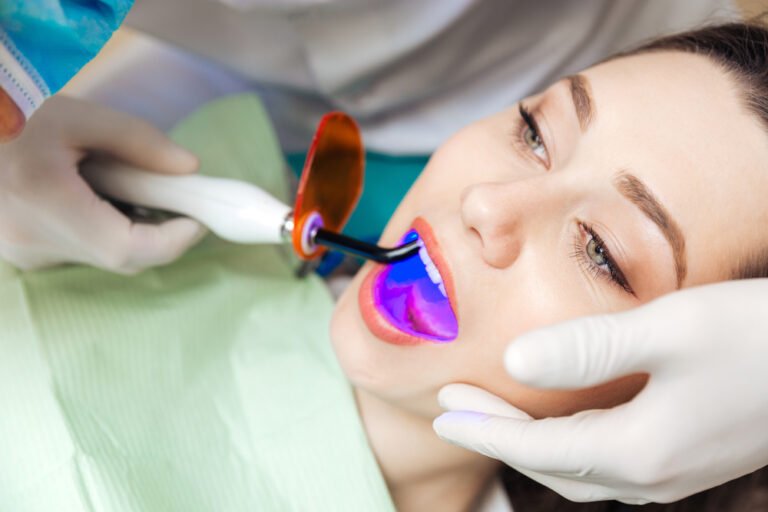
Lots of Gain With No Pain: Check Out The Benefits of Laser Dentistry

It may seem brand-new to you, but dental professionals have been using laser dentistry to provide minimally invasive treatment options for a wide variety of oral health issues since the mid-1900s. Dental laser technology has, of course, undergone significant changes since then, leading to even more improvement in treatment outcomes.

These days, in the hands of a skilled professional, advanced laser technology provides quality care for everything from teeth whitening to gum surgery and tooth restoration. And in many cases, it’s a better choice than traditional dental treatment.

The dentists at The Dental Studio in Summit and Westfield, New Jersey, are well-known for their skill and expertise in all facets of oral health care, including laser dentistry. They often recommend laser dentistry as a better choice than traditional methods for treating a wide variety of dental issues because it’s very effective, greatly decreases or even eliminates your discomfort following a procedure, and speeds healing time after surgery or tooth repair.
So, what exactly is laser dentistry?

In many cases, lasers can effectively replace or greatly reduce the need for drills and scalpels used in dentistry. Medical lasers, the type used by dentists, provide an extremely focused beam of light that creates enough energy to alter or remove tissue.

In dentistry, depending on the treatment, we use hard tissue and soft tissue lasers. Each provides a specific wavelength that replaces drills and scalpels for preparing your teeth for fillings or making incisions in your gums. We can also use hard tissue lasers to detect tooth decay at its earliest stages when treatment is simple and often the most effective.
What are the benefits of laser dentistry?

Beyond eliminating the need for drills and scalpels, lasers are very precise and efficient. Thus, treatments such as tooth preparation for fillings or gum repair are typically quicker and result in less discomfort than traditional dentistry methods.

Read the full article at Laser Dentistry

Also Read Hygiene Tips

Does LIGHT THERAPY Work For PAINFUL & CONTAGIOUS Cold Sores?

Cold sores (also called fever blisters) are a viral condition that is usually caused by herpes simplex virus type 1 (HSV-1). The sores have no known cure, and often take several weeks to clear up and fade away.

Most home remedies for cold sores are ineffective; all they can do is numb the pain and reduce swelling. Prescription antiviral drugs can help to some extent, but may have unwanted side effects.

There is only one remedy that’s clinically proven to heal cold sores, and that’s light—but not just any light.

In this article we’ll discuss two types of light to avoid since they can aggravate cold sores and make them worse.

Light That Worsens Cold Sores

All light is not the same. If you want to quickly heal cold sore lesions and prevent flare-ups, these two types should be avoided.

Sunlight/Ultraviolet Light

Natural sunlight is made up of many wavelengths of light, visible as well as invisible.  Sunlight, for instance, is an effective treatment for depression, largely due to increased production of the mood-affecting neurotransmitter, serotonin. Sunlight can also benefit bone health due to increased vitamin D production, and help regulate the circadian rhythm, which improves sleep.

Ultraviolet light, or UV radiation, is part of the invisible spectrum of sunlight. UV radiation has been used to successfully treat psoriasis and other skin conditions, but it must be administered with extreme caution since overexposure is known to cause skin damage and skin cancer.

Blue Light

The effects of blue light on skin are mixed.

On the positive side, blue light is antibacterial; it eliminates the bacteria found in the skin’s oil glands, which makes it a viable therapy for acne. Another benefit of blue light is that it helps to regulate the circadian rhythm, which is why sun exposure in the morning is so energizing.

However, many of us get most of our blue light exposure not from the sun, but from our electronic gadgets and their artificial light. After-dark exposure to blue wavelengths interferes with our circadian rhythms and, therefore, our ability to sleep.

More importantly, blue light has been associated with damage to the skin and eyes.

Red and Infrared Cold Sore Therapy

Red light therapy, which is also referred to as photobiomodulation and low-level light therapy (LLLT), is known for its healing, skin-regenerating, and anti-inflammatory properties. The term “red light” includes red wavelengths and near-infrared (NIR) wavelengths, both of which are measured in nanometers (nm). The difference between them is that NIR wavelengths are longer and penetrate deeper than red light wavelengths.

Read full article at Light Therapy

Also Read Smart Mouth

Introduction To Laser Light Hair Therapy for the Management of Alopecia
Accidental discovery of Hair Growth

Laser Light Therapy, or Photobiomodulation (PBM) was discovered in 1967 by Endre Mester working at the Semelweiss University in Hungary. Mester had obtained an example of the newly invented ruby laser, and commenced a series of experiments designed to answer two questions: (a) can laser irradiation of an experimental tumour transplanted into a mouse or rat produce any cures? (b)does repeated laser irradiation of the skin in a mouse or rat cause skin cancer?

Development of Low Level Laser Therapy

Although the early studies mainly used red light (600–700 nm), it was subsequently found that near-infrared (NIR) light (760–1000+ nm) was equally (if not more) effective. Light in the low 700 nm regions does not appear to be particularly effective. This double peak in the action spectrum reflects the absorption spectrum of cytochrome c oxidase (CCO), unit IV in the mitochondrial respiratory chain. Together with studies showing the effects of light on isolated mitochondria, these observations led to formation of the most widely-held hypothesis that light stimulates respiration in mitochondria, increasing electron transport, oxygen consumption, and ATP synthesis. This stimulation may happen via photodissociation of inhibitory nitric oxide from the heme and copper centres contained within CCO.

The Three Main Types of Alopecia: Causes and treatment

There are three main types of alopecia; androgenetic alopecia (AGA), alopecia areata (AA) and chemotherapy-induced alopecia (CIA).
Androgenetic alopecia

Androgenetic alopecia (AGA) affects the majority of males as they age, and the distinctive pattern of hair loss is often called “male pattern baldness”. The most important predisposing factors are genetic and hormonal, and the balance between two androgen steroids, testosterone and 5α-dihydrotestosterone (DHT). This balance depends on the activity of the enzyme, 5α-reductase in the scalp. Differences in expression of, or polymorphisms in the androgen receptor gene in the HF may also be involved. The precise androgen responsive genes in the HF responsible for androgenetic alopecia have yet to be identified. While androgenetic alopecia in women operates by similar molecular mechanisms, the visible pattern of hair loss on the head is different.

Read Full Article at Laser Light Hair Therapy

Also Read Sub Health Diagnosis

Weight loss, breathing devices still best for treating obstructive sleep apnea

0

Weight loss: Experts continue to emphasize the importance of lifestyle modifications—especially weight loss—for treating obstructive sleep apnea.

Obstructive sleep apnea is a disorder in which the airway becomes blocked during sleep, interrupting breathing—sometimes dozens of times during a single night. Having obstructive sleep apnea puts you at risk for a number of other conditions, including high blood pressure and stroke.

The importance of weight loss

The link between excess weight and sleep apnea is well established. People who are overweight are more likely to have extra tissue in the back of their throat, which can fall down over the airway and block the flow of air into the lungs while they sleep.

Though losing weight is easier said than done, it can yield real results. If overweight and obese people lose weight, it would make both sleep apnea and other health problems [such as heart disease] go away. Losing just 10% of body weight can have a big effect on sleep apnea symptoms. In some cases, losing a significant amount of weight can even cure the condition.

Other options

The ACP also strongly recommends continuous positive airway pressure, or CPAP. This is typically the first-line treatment for people with sleep apnea, because weight loss can be so hard to achieve. CPAP is a mask or device that fits over the nose and mouth. It blows air into the airways to keep them open at night.

Read Full Story on health.harvard.edu

Also read: ReFa Clear

Dr. Dennis Gross Skincare SpotLite™ Acne Treatment Device

0

Dr. Dennis : Target and treat acne at all stages, even before it surfaces. Maximizing the full spectrum of acne-fighting wavelengths, the blue light penetrates just beneath skin’s surface to fight acne-causing bacteria – at the same time, the red light goes deeper to heal skin, reducing inflammation and redness. Dual purpose LED lights heal active breakouts and prevent future ones from forming while simultaneously flattening blemishes and treating post-acne dark spots. See a reduction in pimple size, redness, and inflammation within days.

System Includes:
SpotLite™ Acne Treatment Device
Quick Start Guide
User Manual

Device Features & Benefits:
2 LED Lights
1 year limited warranty
Easy to use, portable device
Automatic shutoff with beep after 3 minutes
Single on/off button
AAA battery operated (not included)

Skin Benefits:
Clears existing breakouts
Reduces acne-causing bacteria
Reduces risk of scarring
Promotes healthier-looking skin
Prevents acne flare-ups
Calms redness and reduces inflammation

On clean, dry skin, place device directly onto breakout. Press and hold power button for 2 seconds to turn on device and use for the programmed time of 3 minutes. If treating multiple breakouts, repeat steps 1 and 2 to target all areas. After the programmed 3 minutes, the device will beep and shut off automatically.

Read Full Story on drdennisgross.com

Also read: ReFa Clear

ReFa Clear

0

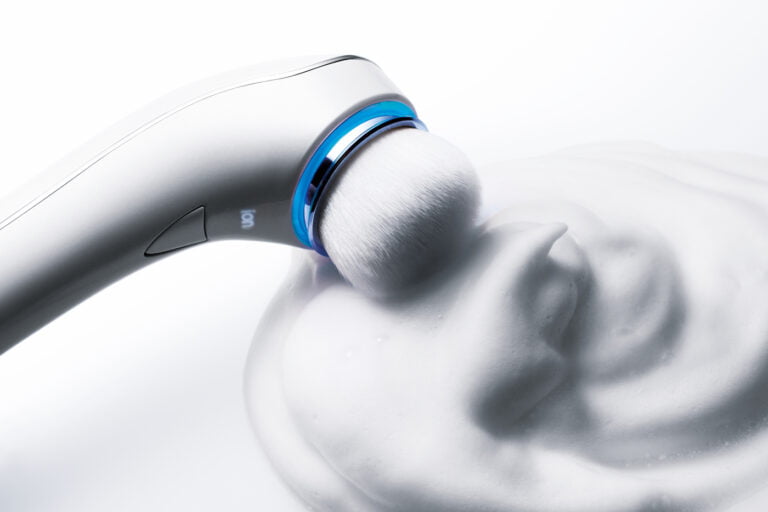
ReFa : Equipped with the world’s first 3D Sonic Ion technology*, a contouring brush head and three modes of operation, this rechargeable facial cleansing brush gently removes dirt, grime and impurities embedded deep within the pores for an unparalleled cleansing experience.

Ion Cleansing: Brings dirt, grime and makeup residue that have accumulated in the pores to the surface of the skin, where they are gently removed without causing any friction or skin damage.

3D Sonic Motion: An elliptical brush movement combined with horizontal and vertical sonic vibrations effectively removes dirt and grime from the fine ridges of the skin as well as the pores.

KUMANOFUDE Brush Head: Ultra-fine KUMANOFUDE bristle tips of varying lengths perfectly conform to the uneven surface of the skin for close and comfortable cleansing without stripping.

Waterproof Construction: Conforms with JIS standards (equivalent to IPX7) for safe use in the bathtub or shower.

HOW TO USE

The ReFa CLEAR has three modes: Soft, Clean and Deep.

Soft: 1 min. A gentle cleanse ideal for the morning or first-time users.
Clean: 1 min. An ideal cleanse for the end of a long day, or after makeup removal.
Deep: 30 sec. An intensive cleanse for clearing oily skin and clogged pores in the T-zone and U-zone.

Read Full Story on refausa.com

Also read: HYBRID NAIL CURING LAMP – Which One To Choose? LED OR UV?

Skin Inc Supplement Bar Optimizer Voyage Tri-Light++

0

Skin Inc. is a brand focused on giving the customer the ability to customize their skincare, and create bespoke products specifically for your own skin concerns. I remember first trying Skin Inc. serums several years ago since they have those colorful beads in them, and also hearing rave reviews about their Pure Serum Mist.  When they gave me the opportunity to try my own customizable serum I was interested to see what would be recommended for my “cocktail,” and when they asked if I wanted to try their Tri-Light I was so ready to experiment. I haven’t used any personal skincare light tools before, although have had some light treatments at facials in the past.

Its been a month of using the Tri-Light in my night routines, and I wanted to round up how I used it, what I thought of it, and the effects on my skin. I’m going to focus more on the light than my customizable serum since that’s something I’ll be featuring and chatting about in my skincare routines via IG, but drop questions below if you have them!

What it is: an LED light and low frequency treatment. The light comes with 3 color options depending on what you want to target, giving you the ability to customize the treatment based on what your skin needs. In Skin Inc.’s words:

The device uses 3MHZ low frequency stimulation that help to gently regenerate skin cells to increase their metabolism and encourage blood and lymphatic circulation. It also helps enhance penetration of topical application of products and active ingredients to up to 90%.  The device also uses LED chromotherapy that activates light receptors in skin cells and stimulates them to improve skin quality. The wavelength for our Red light is 625mm, Yellow light is 590mm and Blue light 460mm. 

Read Full Story on overglowedit.com

Also Read: HYBRID NAIL CURING LAMP – Which One To Choose? LED OR UV?

HYBRID NAIL CURING LAMP – Which One To Choose? LED OR UV?

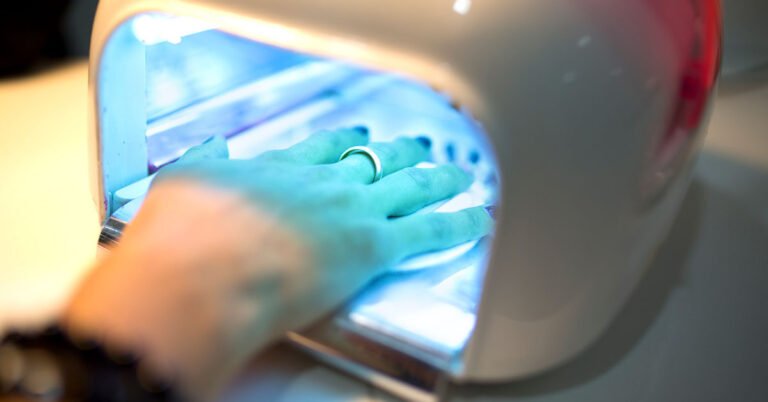
Curing, the final stage of the nail design process, is actually the icing on the cake – the last element for the final effect. In case of insufficient power or type of light, we can significantly extend the time and even make it impossible to envision our designs for a unique nail. That’s why choosing the right hybrid nail curing lamp is a priority.

UV lamp – a classic solution that you should know more about

UV lamps, which are still the most popular devices of this type, cure gel and hybrid nail polishes, but not always with equal results. Theoretically, we can buy a 9W lamp for as little as PLN 29, but is it worth taking the risk? Exactly. After all, a manicure that ripples and comes off quickly is a nightmare that has put many customers off home experiments with hybrid nail polishes. A professional nail design performed in a salon is on a completely different level – to ensure that even heavily pigmented colours and all effects cure without any problems, we need to invest in a 36W device. Professional UV nail lamps offer a broad spectrum of light, so they cure both gel (also coloured ones!) and hybrid nail polishes. The only downside is that the curing process takes longer.

LED lamp – is it really revolutionary?

Since these type of lamps appeared on the market, they have immediately gained a huge group of supporters. Unfortunately, not every lamp is equally good, so as with a UV lamp we should first of all avoid devices with less power to make sure that our nail design is completely cured, and the effects last longer. A bridge shaped curing lamp does not disperse light evenly, hence it provides a poorer effect on the sides and ends of nails. Therefore, LED lamps should have a power rating of at least 36W, but preferably 48W. The biggest advantage of LED lamps is the reduction of working time by at least 50%. Many manufacturers boast that a professional hybrid nail curing lamp guarantees 100% curing in just a few seconds, but you need to know that this does not apply to all products. For gel nail polishes, the product must contain a large number of photo initiators in order to cure in an LED light.

Read Full Article at Nail Curing Lamp

Also Read Nail Pullers

Photo-Therapy To Manage Psoriasis: All That You Need To Know

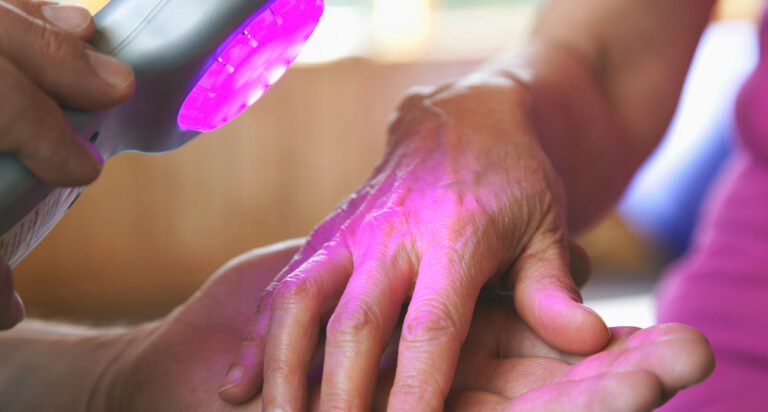
If your skin remains itchy, scaly, and red, you can try Photo-therapy. This is a type of psoriasis treatment that may make the pain and itchiness of the condition go away. It often uses ultraviolet (UV) light, which reduces inflammation and slows down the creation of skin cells.

Photo-therapy is also used for other skin conditions, such as eczema. However, it’s not as simple as just going out in the sun.

A variety of different types of UV light treatments exist. If you’re interested in trying this approach, the key is to determine which one will work best for you.

To be safely treated with photo-therapy, it’s best to talk to your doctor about your options. Your doctor will make sure it’s safe for you.

Main types of Photo-therapy

If you’re ready to try phototherapy, consider which treatment will be best for you. Your doctor may recommend combining UV therapy with a prescription cream.

Narrowband ultraviolet B (NB-UVB) light therapy

Narrow-band ultraviolet B (NB-UVB) is the most common form of photo-therapy. It can be used to treat plaque or guttate psoriasis.NB-UVB lamps and light bulbs emit wavelengths of light between 311 and 313 nanometers (nm), according to recent clinical guidelines on photo-therapy.

However, NB-UVB light therapy is most effective when performed two or three times a week. An emollient such as petroleum jelly may be applied before each session. Once the skin is clear, maintenance sessions can be performed on a weekly basis.

A 2017 study showed that around 75 percent of people receiving NB-UVB treatments found it cleared their psoriasis or led to minimal symptoms. They used fewer prescription creams for their condition, too.

NB-UVB treatments may prove more effective when combined with topical treatments, such as vitamin D analogues and corticosteroids.

Broadband ultraviolet B (BB-UVB) light therapy

Broadband ultraviolet B (BB-UVB) light therapy is an older form of phototherapy than NB-UVB. The two treatments are similar. However, BB-UVB lamps and light bulbs emit wavelengths of light between 270 and 390 nm.

BB-UVB is most effective for plaque psoriasis, although it can also be used for guttate psoriasis. It can be prescribed as a monotherapy or alongside retinoid acitretin (Soriatane). In combination therapy, the skin clears up faster, and lower doses of UVB can be used.

Read Full Article at Psoriasis Treatment

Also Read Carrot Face Mask