

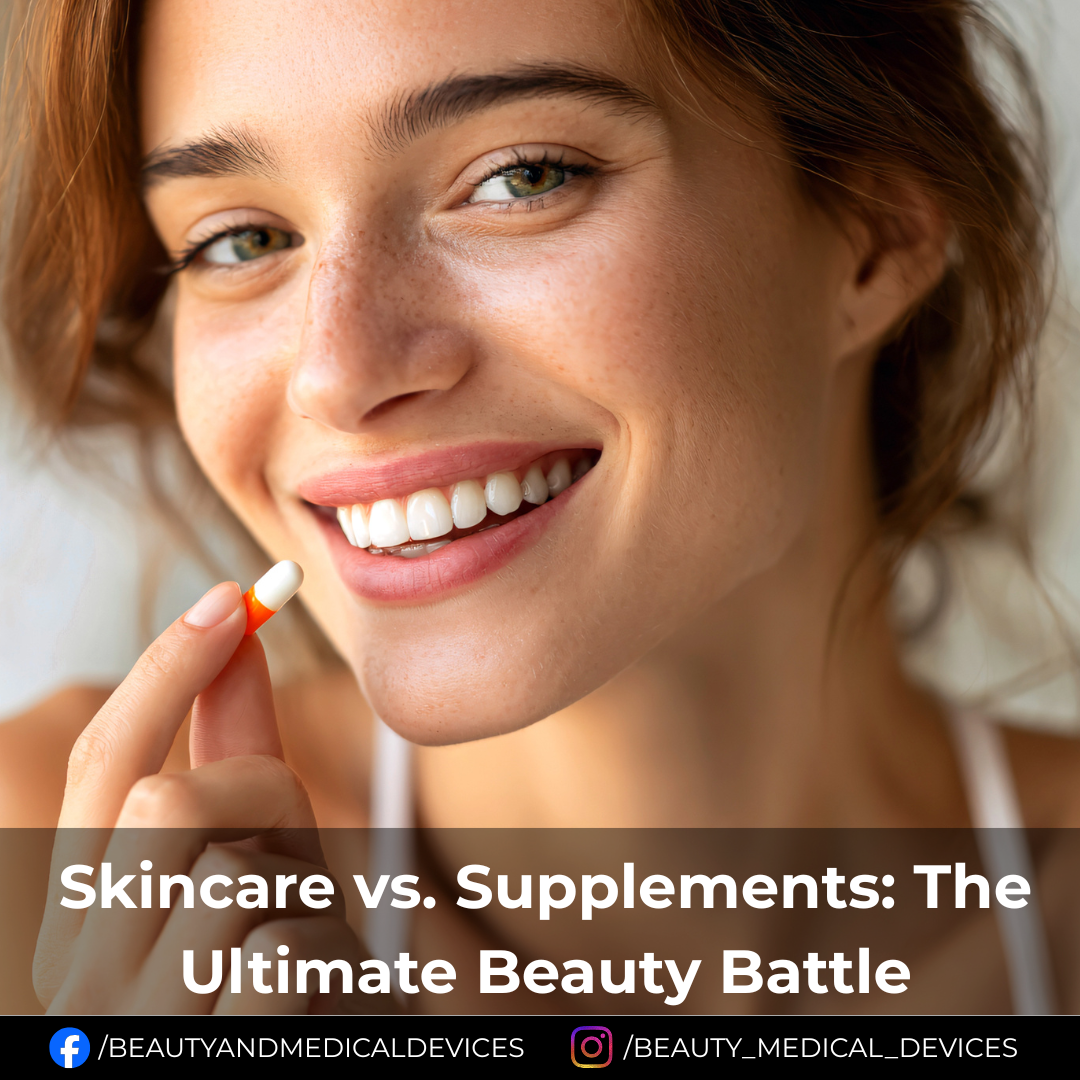
The general consensus is that the most effective approach for beauty and skin health is a harmonious combination of both.
Here’s a breakdown of the pros, cons, and roles of each:
1. Skincare (Topical Products)
- Role: External care, acting directly on the surface and uppermost layers of the skin.
- Key Strengths (External & Targeted):
- Targeted Treatment: Can directly address visible concerns like surface dryness, acne, hyperpigmentation, and fine lines (e.g., using retinoids for anti-aging, vitamin C for antioxidant protection on the surface).
- Fast, Visible Results: Often provides immediate or quicker results, such as an instant “glow,” improved texture, or barrier repair.
- Surface Protection: Crucial for protecting the skin barrier and shielding against environmental damage (e.g., sunscreen is the most vital topical product).
- High Concentration: Active ingredients can be applied at a high concentration exactly where they are needed (e.g., on a specific spot or area).
- Limitations:
- Limited Penetration: Most topical products, particularly larger molecules like standard collagen or hyaluronic acid, are limited to the superficial layers (epidermis) and don’t typically reach the deeper dermis where collagen is produced and skin structure is maintained.Symptom Treatment: Often treats the symptoms (like dryness or inflammation) rather than the deeper, internal causes (like nutrient deficiency or gut health issues).
- Limited Penetration: Most topical products, particularly larger molecules like standard collagen or hyaluronic acid, are limited to the superficial layers (epidermis) and don’t typically reach the deeper dermis where collagen is produced and skin structure is maintained.
2. Supplements (Internal Care)
- Role: Internal care, providing the body with nutrients to support skin, hair, and nail health from the inside out.
- Key Strengths (Internal & Holistic):
- Deep Effect: Work at the cellular level, nourishing the skin’s structure (dermis) and supporting processes like collagen formation, elasticity, and moisture retention throughout the entire body.
- Holistic Benefits: Can address underlying internal factors like nutritional deficiencies, inflammation, and gut imbalances that often manifest as skin issues (dullness, acne, dryness).
- Long-Term Improvement: Supports the skin’s fundamental health and can lead to more sustained, long-term structural benefits.
- Key Ingredients: Commonly include Collagen Peptides (for structure), Hyaluronic Acid (for moisture retention), Vitamins C & E (antioxidants), Zinc (for healing), and Omega-3s (anti-inflammatory).
- Limitations:
- Slower Results: Results are not immediate and can take longer to become noticeable, often aligning with the skin cell turnover rate (around 3 months of consistent use).
- Bioavailability: Nutrients are absorbed systemically, meaning only a fraction of the ingested dose may ultimately reach the skin compared to being applied directly.
- Regulation: Supplements are not strictly regulated by agencies like the FDA in the same way as drugs, making ingredient purity and dosage crucial factors to vet.
The Conclusion: A Synergistic Approach
The ultimate winner is a bidirectional beauty routine that combines the two:
By using a targeted topical routine and ensuring a consistent intake of skin-supportive nutrients, you’re attacking the challenge from all angles for maximum effect.