


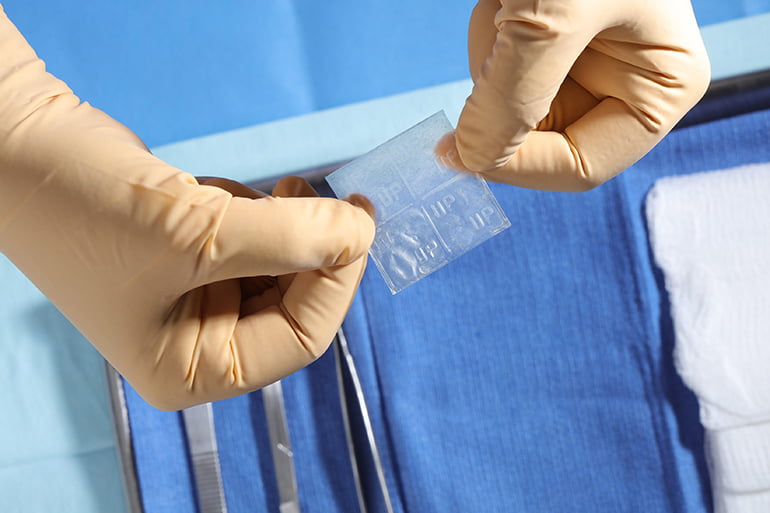
MiMedx, a medtech company based in Georgia, has developed EpiFix, an off-the-shelf allograft system for the treatment of diabetic foot ulcers. The grafts are made using donated human placental tissues that are obtained from consenting mothers during caesarean section procedures. The tissues then undergo a proprietary processing procedure to clean them and eventually produce a dehydrated graft that can be stored at room temperature long term.
Diabetic foot ulcers are relatively common in patients with diabetes, presenting in as many as 15% of such patients. These wounds are stubborn and typically resistant to treatment, with current treatment approaches meeting with mixed success. The ulcers often present with complications such as infection, which frequently result in hospitalization.
These issues have inspired a different approach in the form of a human tissue-derived off-the-shelf graft that can be applied to an ulcer. The idea behind EpiFix is that it protects the wound site and promotes the healing process, and several studies have shown that the technology can enhance wound closure compared with current treatment approaches.
A diabetic foot ulcer is an open sore or wound that occurs in approximately 15% of patients with diabetes and is commonly located on the bottom of the foot. DFUs develop from a combination of factors such as lack of feeling in the foot, poor circulation, irritation (such as friction or pressure), and duration of diabetes. Of those who develop a foot ulcer, more than 5% will be hospitalized due to infection or other ulcer-related complications.
DFUs continue to be a major problem, causing patient suffering, infections, and high mortality. The cost of DFU treatment was estimated at $1.3 trillion globally in 2015. Despite evolving advanced wound care technologies through the years, DFUs continue to be among the most challenging chronic wound types.
Also Read: Monitoring Cognitive Performance Using Smart Devices