

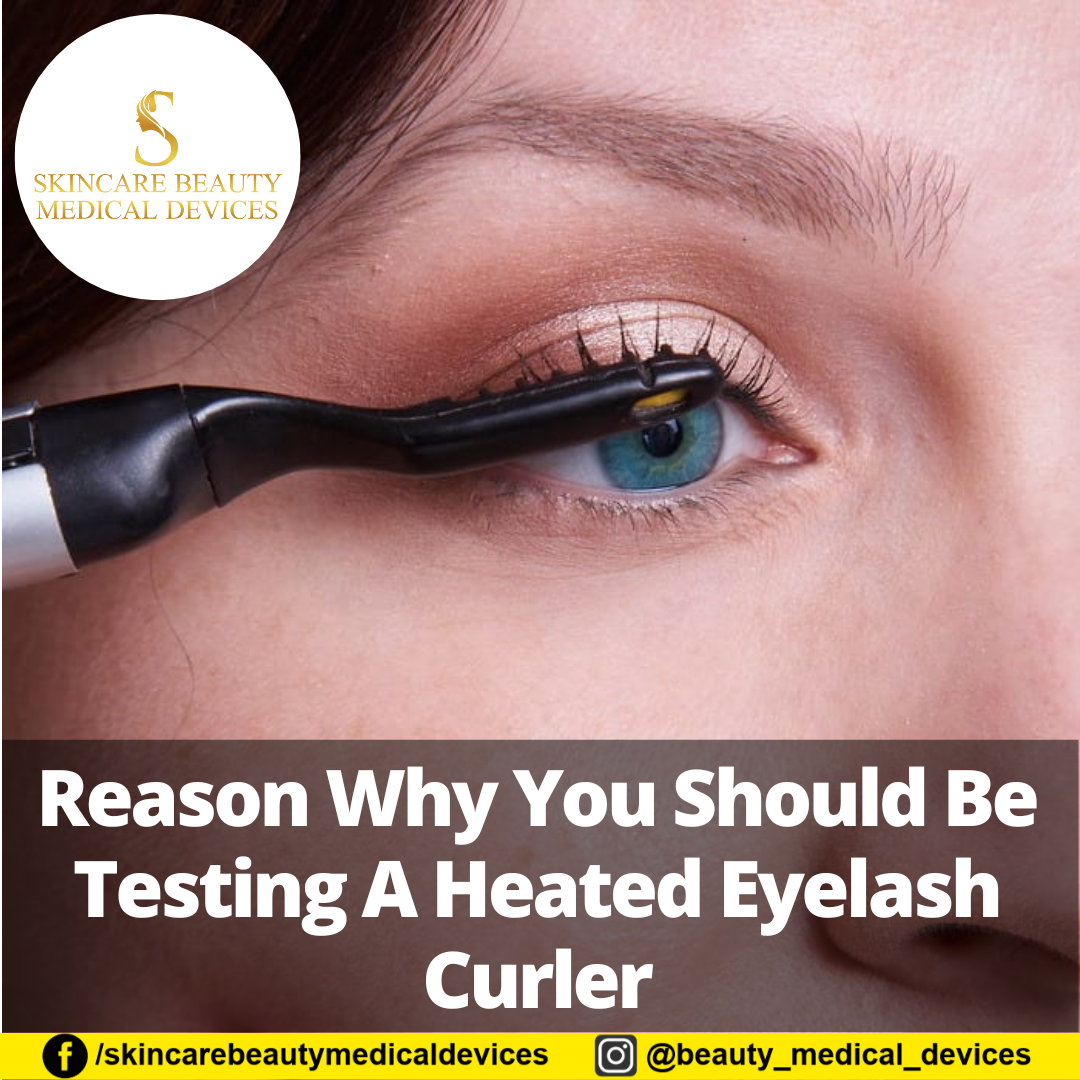
We all know the power of a good eyelash curler, but now there is also the option of using a heated curler to get an even more intense curl and amplify the look. It is like a hot tool for the lashes as the heat makes them curl upwards and has a more extended staying power than a regular curler. Of course, completing the process with a few coats of mascara is necessary, but the results are worth it.
There are a few curlers, but one of the best-reviewed is the Chella Heated Eyelash Curler. It is a highlight because of its capacity to distribute heat evenly, compact design, and ease of use. It also features a temperature indicator light and a comb with heated teeth.
:max_bytes(150000):strip_icc():format(webp)/Chella-Heated-Eyelash-Curler-3-20f8160065524203b13513767cd0aed9.jpg)
Another option is the Panasonic Heated Eyelash Curler, which presents a durable, circular lash curler comb that separates curls, and styles lashes from base to tip without crimping or pinching. It can be used with or without mascara and is easily cleaned under warm running water. Furthermore, it is portable and powered by a 1 AA size battery.
Lastly, there is the Lash Star Heated Lash Styler, which is a rechargeable option. It has a compact design, with the advantage of being able to charge it almost anywhere, and works well on natural lashes, falsies, or eyelash extensions. It looks like a flash drive and comes equipped with a USB port.
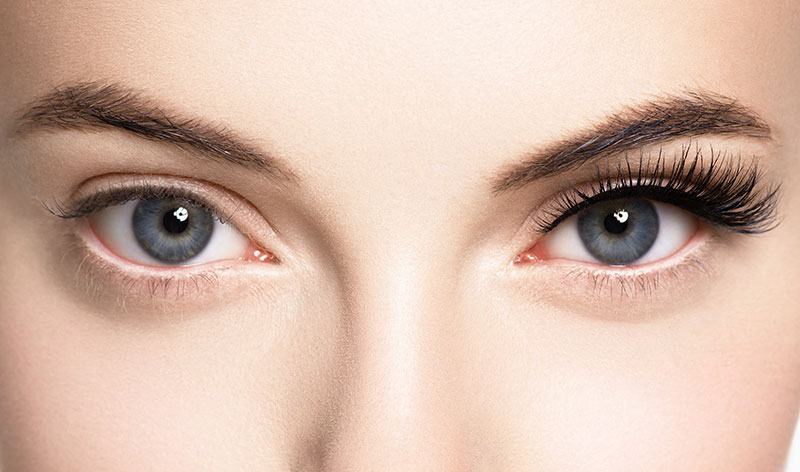
In conclusion, there are many options to choose from when it comes to heated eyelash curlers, and they are a great choice if you use effective and safe ones. It is also essential to pick the right one to work as expected for the type of lashes you wish to curl.
Read Also: Back Acne: The Recommended Procedures To Get Clearer Skin
To know more about Skincare Devices and Beauty’s latest updates, please Like and Follow our Facebook and Instagram accounts…

About the Author: MSci Maísa Melo is a Pharmacist and a current PhD student in cosmetic technology, from São Paulo, Brazil. She has earned her master’s degree from the University of São Paulo and has been involved with the development, stability, safety and efficacy of cosmetics since 2013. She has specialized in the clinical efficacy of cosmetics by biophysical and skin imaging techniques as well as the use of alternative models to animal testing. Her research work has been published in several scientific journals and book chapters from the field.