

 to remove stagnation and stimulate the flow of qi (chi).)

Where did cupping come from?
Cupping is a therapy used in traditional Chinese medicine (TCM) to remove stagnation and stimulate the flow of qi (chi). Qi is the free flow of vital energy circulating through the body and the world around us, if the qi is disrupted or disturbed, it can create stagnation (blockages) or imbalances in the body.

What is cupping in a massage?
A therapeutic cupping treatment involves warming and placing cups, usually made of glass, on the skin. By warming the air within the cup, a vacuum is created, and when it is applied to the skin, the tissue is drawn up into the cup. This increases the blood flow, loosens the fascia or connective tissue, and is thought to stimulate healing. It is similar to the way deep tissue massage can be used to break up scar tissue and reduce pain. The cups are often placed on the back, neck, and shoulders or the site of pain. Cupping may cause temporary bruising and soreness, depending upon the degree of suction created by the vacuum and the level of internal stagnation. According to TCM, this would be a favorable outcome, suggesting the treatment has successfully removed toxins and stagnation. The cups are removed by lifting one edge, which allows air in and breaks the seal and vacuum.
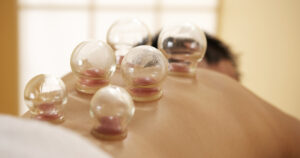
What are the different types of cupping?
Different types of cupping are selected based on the treatment goals of the acupuncturist. There are also different types of cups. Most commonly, cups are made out of glass. However, a thousand years ago, cups were made of bamboo, clay, or animal horns. According to Ann Michelle Casco, L.Ac., a traditional Chinese medicine practitioner and acupuncturist, the classic cupping technique is called ba guan zi, which is fire or dry cupping. This involves placing the cup over an ashi (painful area) point or an acupuncture point along an energy meridian. The cups are left in place anywhere from five to 20 minutes depending on the nature of the individual’s condition. A general course of treatment involves four to six sessions in intervals starting from three- to 10-day gaps.
Read the Complete Article at medicinenet.com
To know more about Skincare Devices and Beauty’s latest updates, please Like and Follow our Facebook and Instagram accounts…
Also read: Cryotherapy: Why Freezing Your Face Is The Best Thing For Your Skin