


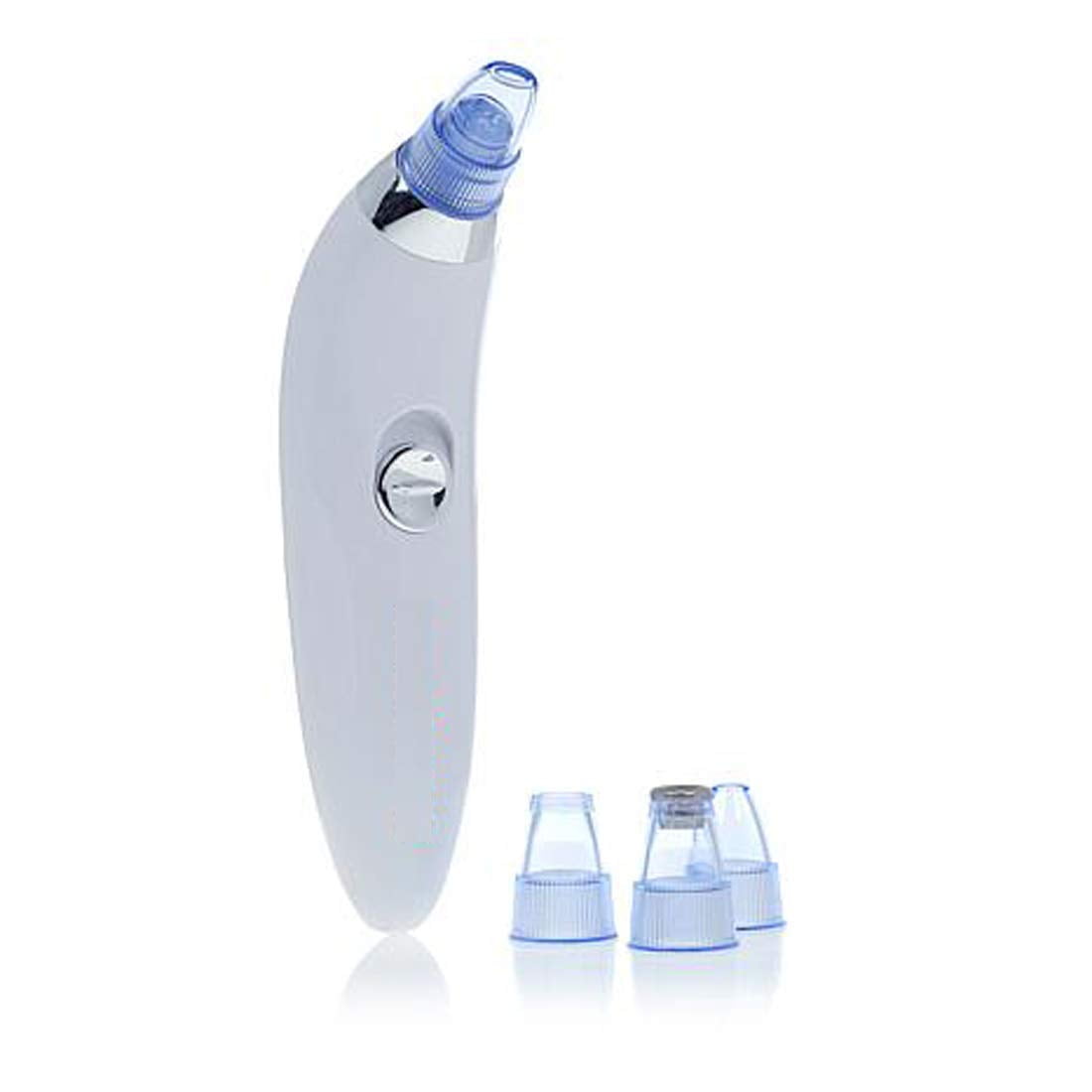
There are many ways to remove blackheads. One of the more recently popular ways is by using a pore vacuum, also known as a blackhead vacuum.
A blackhead vacuum is a small vacuum that’s positioned over a blackhead. Its mild suction extracts the oil and dead skin out of the pore.
Some blackhead vacuums are professional Food and Drug Administration (FDA) approved devices that experienced technicians operate. Some are also inexpensive DIY units.
Blackheads are pores that have been clogged with oil and dead skin cells. The clog gets oxidized by the air, turning it dark. They’re also called open comedones. (Whiteheads are closed comedones.)
According to the University of Utah, pore vacuums can help with blackheads that have been loosened.
Exfoliation and pore penetration to loosen up pores and help the vacuum work could include:
- steam
- glycolic acid
- salicylic acid
The use of the proper amount of suction for your particular skin is of critical importance. Bruising can result from too much suction.
Too much suction can also result in telangiectasias. Telangiectasias, also known as spider veins, is characterized by small, broken, or dilated blood vessels near the surface of the skin.
Although it can be tempting, don’t squeeze blackheads. Squeezing can lead to skin damage, including scarring.
Here are some alternative techniques that may help you get rid of blackheads:
- Use an over-the-counter (OTC) cleanser with salicylic acid. Salicylic acid breaks down the dead skin cells and oil clogging your pores.
- Exfoliate with beta hydroxy acid (BHA), such as glycolic acid.
- Use an OTC topical product containing a retinoid.
- Try a clay facial mask.
- Try a charcoal facial mask.
- Use noncomedogenic face products.
- Wash your face after sweating.
- Don’t sleep in your makeup.
- Consider seeing a dermatologist for a chemical peel.
- Consider seeing a dermatologist for professional extraction.