


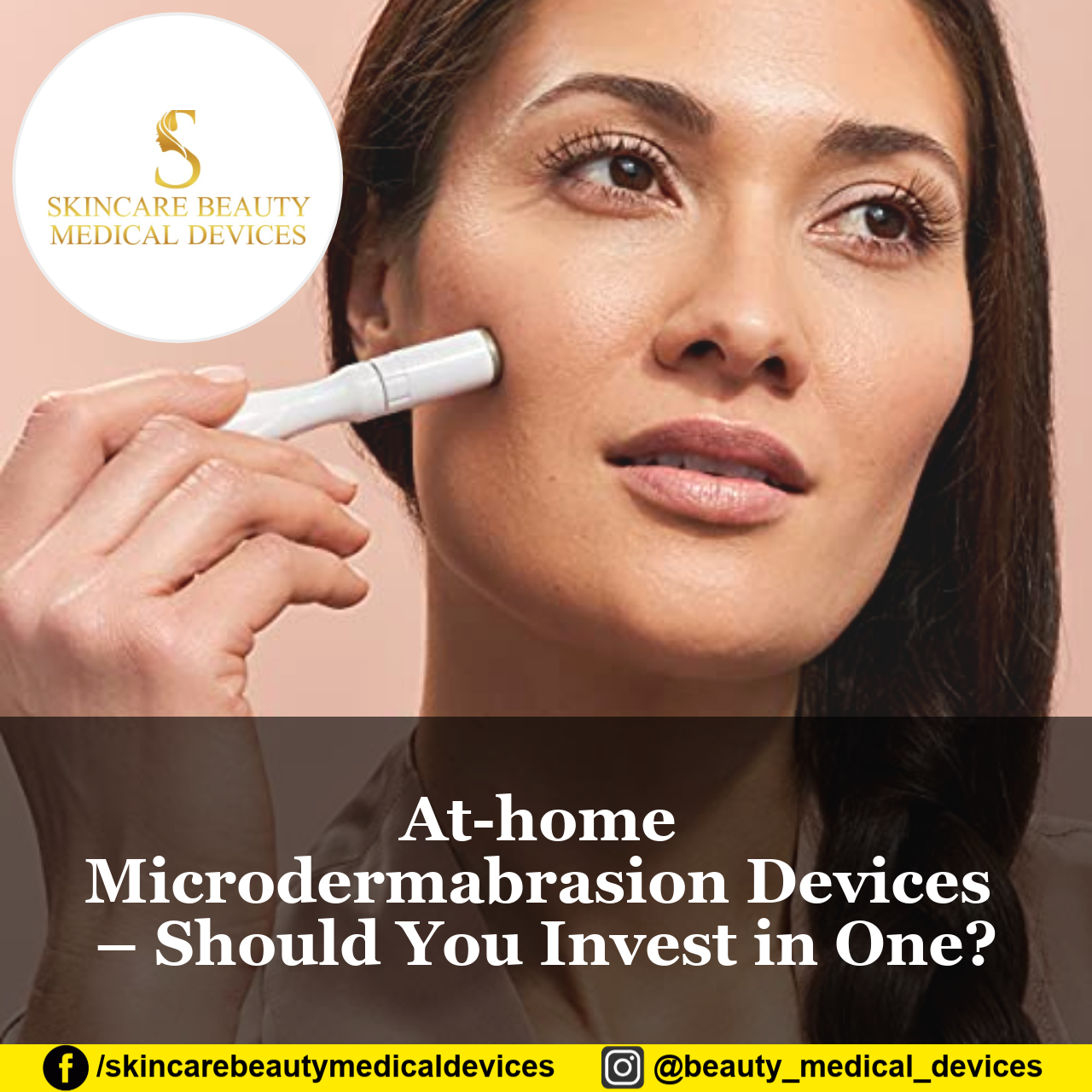
Microdermabrasion is a mechanical peel that removes, by use of suction and exfoliation, the debris and dead skin cells from the top skin layer. With that, improvements in the skin conditions such as roughness, unwanted discolorations and sun damages can be noted. It is also known to enhance cosmetic delivery, facial rejuvenation, and a brighter looking skin.
It is very popular due to its safety, low risk of side effects and for being a relatively budget-friendly procedure when compared to other cosmetic treatments done at professional clinics.
But that is not the only way to have a microdermabrasion. There are also some devices on the market that allow an at-home treatment with similar effects to the professional one, when done correctly. They will also promote blood circulation and stimulate the deeper layers of the skin, promoting improvements in the aging signs.
These devices usually come with different probes so you can adapt the equipment to your desired objectives, like treatment of oily skin, clogged pores, rejuvenation, and others. The diamond dermabrasion is the most used method on both professional and at-home techniques and will provide a massage and exfoliation without hurting the face skin.
We can cite the LUMINA NRG Microderm Device, Microderm Glo Mini Diamond Microdermabrasion and Suction Tool, Spa Sciences Mio Diamond Microdermabrasion Resurfacing System and Trophy Skin MiniMD Microdermabrasion Machine as great examples.
If you choose to invest in one, don’t forget to be extra careful with the instructions. Try not to overdo it and be aware of its limitations because even if it is close to professional devices, they don’t have the same power or trained professionals to perform the treatment. Also, it is not recommended in cases of ultra-sensitive skin, active acne breakouts, or conditions like eczema, rosacea, or keratosis pilaris.


About the Author: MSci Maísa Melo is a Pharmacist and a current PhD student in cosmetic technology, from São Paulo, Brazil. She has earned her master’s degree from the University of São Paulo and has been involved with the development, stability, safety and efficacy of cosmetics since 2013. She has specialized in the clinical efficacy of cosmetics by biophysical and skin imaging techniques as well as the use of alternative models to animal testing. Her research work has been published in several scientific journals and book chapters from the field.
To know more about Skincare Devices and Beauty’s latest updates, please Like and Follow our Facebook and Instagram accounts…